
Summary
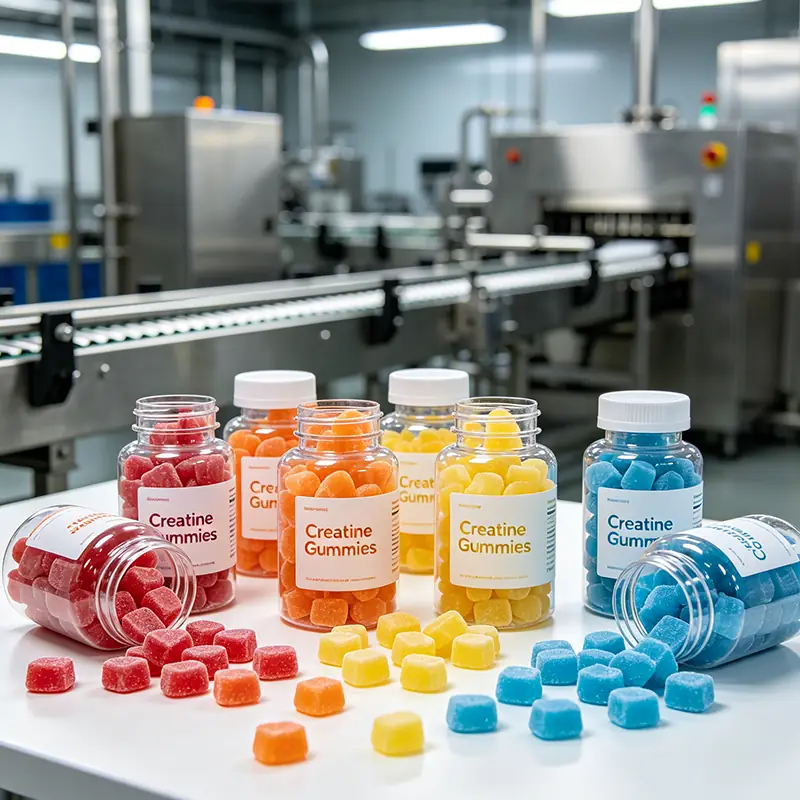
Brands are able to make gummies at low cost and high speed by partnering with contract manufacturers that already operate standardized formulations, automated production lines, and pre-approved packaging systems. This behind-the-scenes process removes most of the capital investment and technical complexity a brand would otherwise face, allowing products to move from concept to shelf in a matter of weeks rather than months.
Definition
Low-cost, high-speed gummy production refers to the manufacturing approach used by contract gummy factories to shorten development timelines and reduce per-unit costs, typically through the use of existing base formulations, shared production equipment, and streamlined quality control checkpoints, while still meeting label claims and regulatory requirements.
Main Content
Why Speed and Cost Matter in Gummy Production
Supplement brands operate in a competitive market where time-to-market often determines whether a product captures early consumer interest. At the same time, keeping unit costs low is essential for maintaining margins, especially for smaller or newer brands testing product-market fit. A modern Gummy Factory is built specifically to balance these two pressures.
Step 1: Formula Selection or Adaptation
Instead of developing a formulation from scratch, most brands start from a factory’s existing base formula — for example, a multivitamin, probiotic, or herbal gummy — and adjust flavor, potency, or minor ingredient details. This step alone removes weeks of R&D time compared to a fully custom formulation project.
Step 2: Raw Material Procurement
Factories with established supply chains can source pectin, sweeteners, flavors, and active ingredients in bulk, reducing per-unit material costs. Reliable suppliers also keep buffer stock of common ingredients, which shortens lead times for standard formulations.
Step 3: Small-Batch Sampling
Before full production, a small sample batch is typically produced so the brand can approve taste, texture, and appearance. This step is usually completed within days when using an existing base formula, compared to multiple rounds of trial-and-error required for entirely new formulations.
Step 4: Automated Molding and Drying
Once approved, production moves to automated depositing, molding, and drying lines. Automation reduces labor cost per unit and increases consistency across batches, which is a key factor in keeping production both fast and affordable at scale.
Step 5: Quality Control and Testing
Batches pass through in-process checks and, where required, third-party lab testing for potency and contaminant screening. Factories with dedicated QC teams can run these checks in parallel with production rather than as a separate bottleneck, preserving speed without skipping compliance steps.
Step 6: Packaging and Labeling
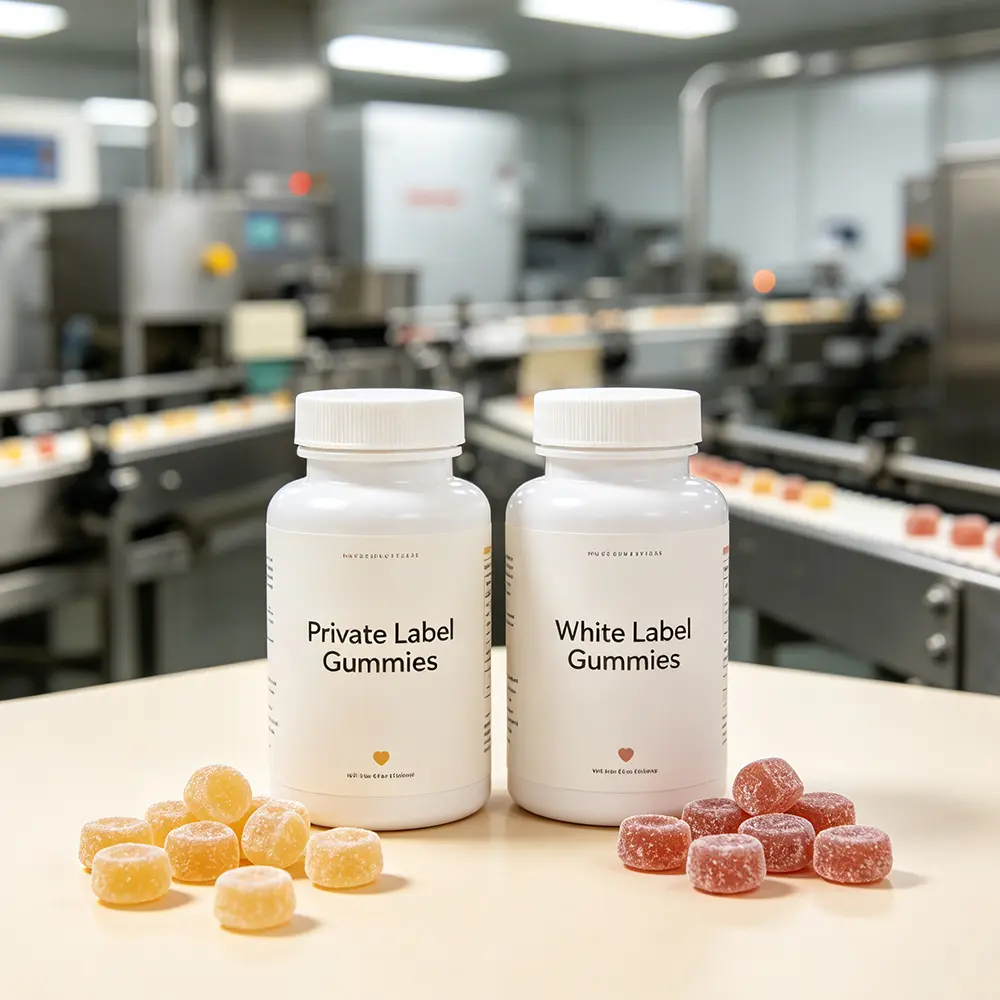
Standardized packaging formats — such as stock bottles or pouches — allow faster turnaround than fully custom packaging tooling. Brands seeking private label gummies often choose from a factory’s existing packaging options first, then layer on custom labels and branding.
Step 7: Shipment and Fulfillment
Once packaged, finished goods are prepared for shipment to the brand’s warehouse or distribution partner. Factories with in-house logistics coordination can reduce the handoff delays that often occur between production and shipping.
What Keeps Costs Low
Cost efficiency comes primarily from shared use of existing formulations and equipment, bulk raw material purchasing, and production runs that batch multiple brand orders through the same manufacturing line. Custom tooling, exclusive formulations, or low-volume orders tend to increase per-unit cost.
Limitations to Understand
Speed and cost advantages generally come with some trade-offs: base formulations may be shared across multiple brands, and full customization requests can extend both timeline and cost. Brands prioritizing complete formulation exclusivity should expect longer development cycles.
Technical Parameter Table
| Production Stage | Typical Timeframe | Cost Impact |
|---|---|---|
| Formula selection/adaptation | 1–3 days | Low (uses existing base formula) |
| Raw material procurement | 3–7 days | Reduced via bulk sourcing |
| Sample batch approval | 3–5 days | Minimal, small batch size |
| Molding and drying (automated) | 1–2 weeks | Lowered by automation and scale |
| Quality control testing | Parallel to production | Fixed cost per batch |
| Packaging and labeling | 3–7 days | Lower with standard packaging formats |
| Shipment and fulfillment | Varies by destination | Reduced with in-house logistics coordination |
Practical Insights
Production quality depends on how well a factory documents and controls each step, from raw material intake to final packaging. Brands should ask for evidence of consistent batch records and testing protocols rather than assuming speed and cost efficiency automatically imply lower quality — the two are not inherently linked when process controls are strong.
Scalability matters as much as initial speed: a factory that can move smoothly from a small trial order to a much larger reorder, without renegotiating timelines or costs significantly, offers more long-term value. Compliance and documentation readiness — certificates of analysis, allergen disclosures, and stability data — should be confirmed regardless of how quickly a batch is produced.
B2B Decision Guide
Brand owners evaluating a gummy manufacturing partner should first confirm which existing formulations align with their product concept, since this directly affects both cost and speed. In OEM/ODM discussions, it’s important to clarify upfront how much customization is included at standard pricing versus what triggers additional development time or fees.
Assessing a factory’s production capability involves reviewing certifications, cleanroom class, and daily/annual output capacity. For long-term partnerships, brands should prioritize manufacturers offering transparent batch records, consistent lead times, and scalable capacity as order volume grows. Risk control checkpoints include clear quality agreements, defined testing protocols, and traceability of raw materials back to their source.
Conclusion
Producing gummies quickly and affordably is achievable when brands work with a manufacturer that has already optimized formulation libraries, automated production lines, and standardized packaging systems. Understanding each stage of this process — and where the real cost and time savings come from — helps brand owners set realistic expectations and choose manufacturing partners suited to their growth stage.
FAQ
How do brands make gummies at low cost?
By using a manufacturer’s existing base formulations, bulk raw material sourcing, and standardized packaging, which reduces both development time and per-unit production costs.
What makes gummy production fast?
Automated molding and drying lines, pre-approved formulations, and parallel quality testing all shorten the time between order placement and finished product.
Do low-cost gummies sacrifice quality?
Not necessarily. Quality depends on a factory’s process controls and testing protocols, which can remain rigorous even when production is fast and cost-efficient.
What is the difference between using an existing formula and a fully custom one?
Existing formulas can be adapted in days and cost less, while fully custom formulations require additional development time and typically higher minimum order quantities.
Can brands still get private label gummies with fast turnaround?
Yes, private label gummies using standard formulations and packaging formats generally have shorter turnaround times than fully custom development projects.
What should a brand check before choosing a gummy factory?
Certifications, production capacity, batch documentation practices, and the factory’s track record with similar product types should all be reviewed before committing to a partner.
About Gothink Biotech
Shenzhen Gothink Biotech Co., Ltd. is a GMP-certified dietary supplement contract manufacturer specializing in gummy, capsule, tablet, powder, liquid, and drop supplement production. The company offers full OEM, ODM, CMO, and CDMO services, supporting private label and custom formulation projects for brands, distributors, and startups. Its facility operates a 100,000-class cleanroom with a daily output of 16 tons and an annual production capacity of 5,000 tons, supported by a 10,000-class pharmaceutical-grade R&D laboratory and a team including postdoctoral researchers with backgrounds at U.S. institutions. Certifications include ISO 9001, ISO 22000, HACCP, FDA, HALAL, KOSHER, and Vegan. Gothink Biotech provides end-to-end support from formulation development through bulk and wholesale supply, with flexible MOQs suited to both small trial runs and large-scale, long-term production partnerships.