
Summary
This guide provides a technical overview of the formulation and production process for creatine monohydrate gummies, addressing solubility challenges and dosage uniformity. It covers essential manufacturing steps, quality control measures, and strategic considerations for B2B buyers. The goal is to equip brands with the knowledge to develop high-performance, stable creatine supplements.
Definition
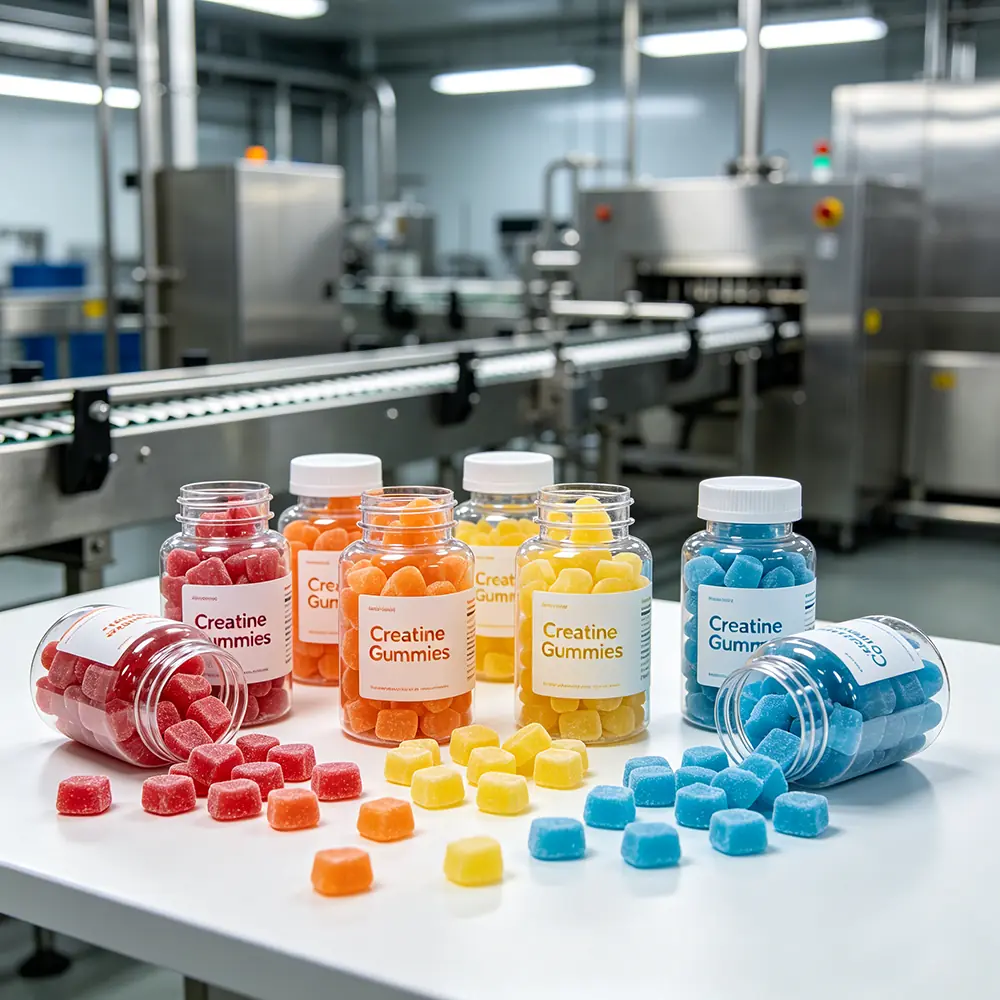
Create creatine monohydrate gummies refers to the specialized manufacturing process of formulating chewable dietary supplements that encapsulate creatine monohydrate within a gelatin or pectin matrix. This process aims to mask the inherently gritty texture and bitter taste of creatine while ensuring precise dosage delivery and product stability over its shelf life.
Manufacturing Process: Step-by-Step
1. Formulation Development
Creating a stable creatine gummy begins with overcoming the ingredient’s low solubility and sensitivity to heat. Manufacturers typically use micronized creatine monohydrate to improve dispersion. The base requires high-binding agents, such as pectin or specific gelatin blends, to suspend the heavy creatine particles effectively without causing sedimentation.
2. Slurry Preparation and Mixing
The process involves preparing a water and sugar (or sugar substitute) slurry. Gelling agents are hydrated and heated. To create creatine gummies effectively, the temperature must be strictly controlled; creatine can degrade into creatinine if exposed to excessive heat for prolonged periods. Flavoring agents, citric acid, and colors are added at specific temperature thresholds to prevent degradation.
3. Active Ingredient Incorporation
The creatine monohydrate is blended into the slurry at a lower temperature to preserve potency. High-shear mixing is often required to ensure the powder is fully integrated and agglomerations are broken down. This step is critical for making creatine gummies that possess a smooth mouthfeel rather than a gritty texture.
4. Depositing and Molding
The homogeneous mixture is deposited into starch molds or silicone molds using automated depositors. Precision during this phase ensures weight consistency. For brands seeking private label creatine gummies, mold customization offers a competitive edge in terms of shape and branding.
5. Drying and Curing
The gummies undergo a drying tunnel process to remove excess moisture and achieve the desired texture. The water activity (aw) must be reduced to below 0.65 to prevent microbial growth and ensure shelf stability. This phase can take several hours depending on the gummy size and base used.
6. Coating and Packaging
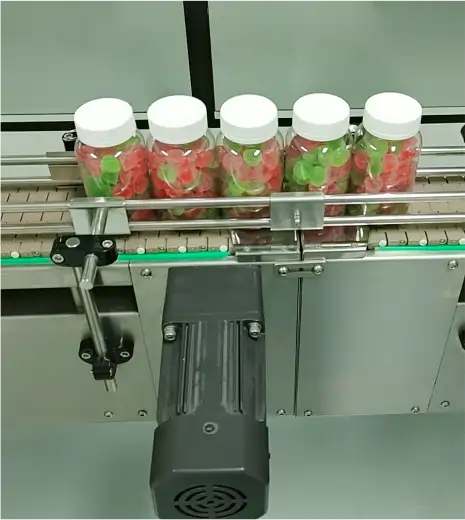
Once cured, the gummies are demolded, often polished with oil or beeswax to prevent sticking, and then packaged. Moisture-barrier packaging is essential to prevent the gummies from becoming hard or sticky.
Practical Insights
Production Challenges
The primary challenge in production is “blooming,” where creatine crystals migrate to the surface of the gummy over time. This can be mitigated by using humectants like glycerin or sorbitol and optimizing the binding matrix to hold the creatine in suspension.
Quality Control and Dosage
Because creatine is typically dosed at 3g to 5g per serving, and a standard gummy weighs roughly 3g to 5g total, achieving a 100% concentration is difficult. Manufacturers often produce larger gummies or recommend consuming multiple gummies to meet the efficacious dose. Rigorous weight variation testing and HPLC analysis are mandatory for every batch to verify potency.
Scalability
Transitioning from lab scale to mass production requires equipment capable of handling high-viscosity slurries. Large mixers and temperature-controlled depositing systems are necessary to maintain the suspension of creatine particles during high-speed runs.
Compliance
The product must comply with dietary supplement regulations (such as FDA cGMP in the US). Labeling must accurately reflect the serving size and creatine content, distinguishing between creatine monohydrate and other forms like creatine HCL.
Technical Parameters for Creatine Gummies
The following table outlines the critical technical specifications required for high-quality production.
| Parameter | Specification Range | Impact on Product |
|---|---|---|
| Creatine Purity | ≥ 99.0% (Micronized) | Ensures efficacy and reduces grittiness in texture. |
| Serving Size Dosage | 3,000mg – 5,000mg | Standard clinical dosage for performance enhancement. |
| Water Activity ($a_w$) | 0.55 – 0.65 | Critical for microbial stability and shelf life. |
| Brix (Soluble Solids) | 75% – 82% | Determines the texture, chewiness, and drying time. |
| Processing Temperature | < 80°C (during addition) | Prevents degradation of creatine into creatinine. |
B2B Decision Guide: Choosing a Manufacturing Partner
When selecting a creatine gummies manufacturer, B2B buyers should evaluate several critical factors to ensure product success.
- Technical Expertise: Does the manufacturer have experience with high-load active ingredients? Standard vitamin gummies (with micro-doses) are easier to produce than creatine gummies, which require high particulate loading.
- R&D Capabilities: Look for a partner that offers pilot testing. Before committing to a full production run, request samples to test for mouthfeel, flavor masking, and physical stability over time.
- Certification: Ensure the facility holds GMP, ISO, and relevant food safety certifications (HACCP, FDA registration). This is non-negotiable for retail acceptance.
- Supply Chain: Verify the source of the raw creatine. A reliable manufacturer will have supply chains for high-quality, tested creatine monohydrate.
Conclusion
Successfully manufacturing creatine monohydrate gummies requires a sophisticated approach to formulation and process control to manage the ingredient’s physical properties. By prioritizing texture optimization, dosage accuracy, and stability testing, brands can deliver a convenient alternative to traditional powders. Partnering with a skilled contract manufacturer is essential to navigate these technical challenges.
FAQ
Q: Why is it difficult to put creatine in gummies? A: Creatine monohydrate has a gritty texture, low solubility, and a bitter taste. It is also sensitive to heat, requiring careful temperature control during the cooking process to prevent degradation.
Q: What is the standard dosage for creatine gummies? A: The standard efficacious dose is 3 to 5 grams per day. Due to this large volume, most creatine gummies require consuming 2 to 4 large pieces per serving.
Q: Can creatine gummies be vegan? A: Yes, by using pectin instead of gelatin as the gelling agent, manufacturers can produce vegan-friendly creatine gummies.
Q: How should creatine gummies be stored? A: They should be stored in a cool, dry place away from direct sunlight. Moisture control is vital, as humidity can cause the gummies to become sticky or degrade the active ingredient.
About the Manufacturer
Shenzhen Gothink Biotech Co., Ltd. is a premier contract manufacturer specializing in the production of high-quality dietary supplements, including advanced formulations like creatine gummies. As a leading creatine gummies manufacturer, we offer comprehensive OEM/ODM services tailored to global brands.
With a state-of-the-art facility featuring a 100,000-class cleanroom and an annual production capacity of 5,000 tons, we are equipped for high-volume bulk production and wholesale demands. Our company is distinguished by a 10,000-class pharmaceutical-grade R&D laboratory led by a chief scientist with postdoctoral experience from top US institutions. This ensures that when we create creatine monohydrate gummies, the process is backed by world-class science and rigorous quality assurance.
We provide end-to-end turnkey solutions, handling everything from custom formulation and flavor design to packaging and logistics. Our capabilities extend to private label creatine gummies, allowing brands to launch proprietary products with low MOQs and flexible customization. Certified under ISO9001, FDA, GMP, and Halal, Gothink Biotechnology is your trusted partner for scalable, compliant, and innovative supplement manufacturing.