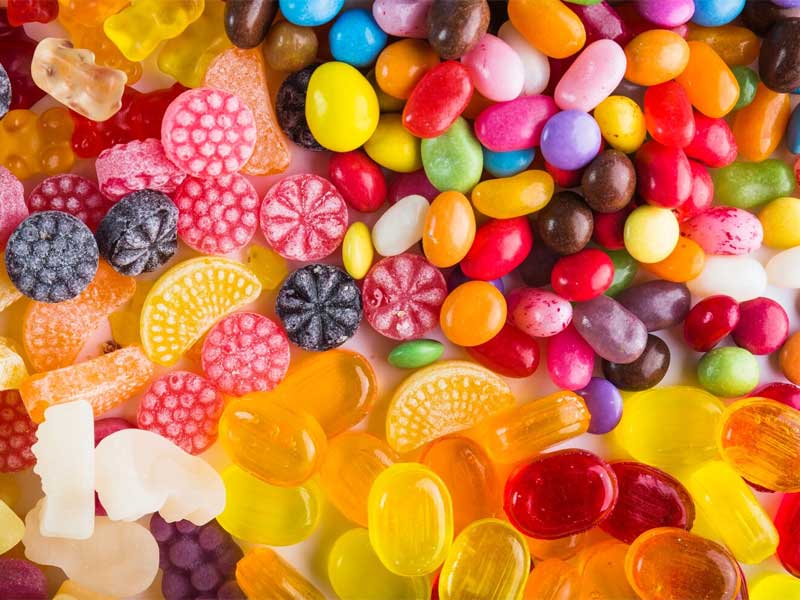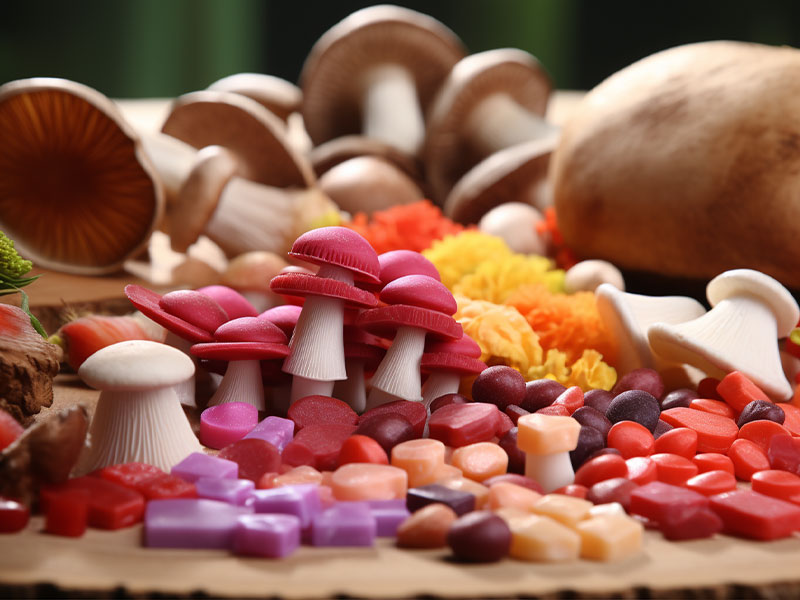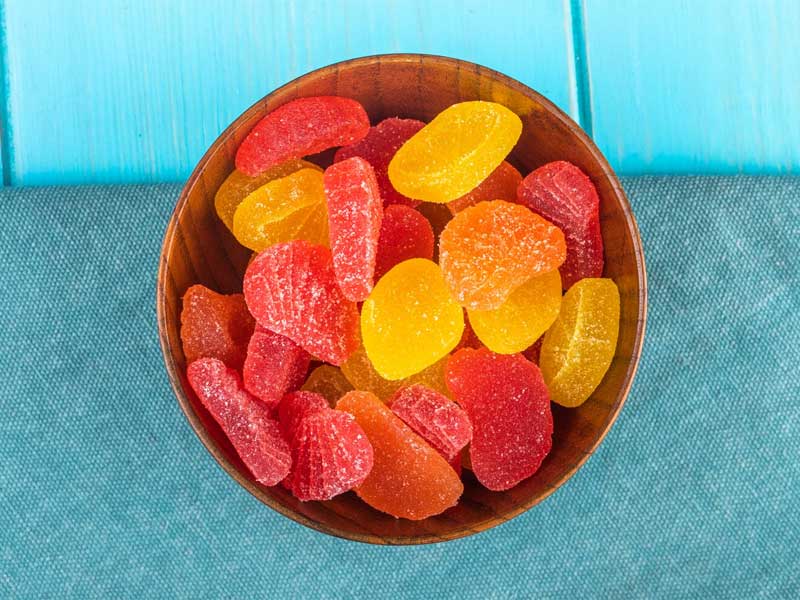

Gummy vitamins are produced through a controlled multi-stage manufacturing process that combines gelling agents, active nutrients, sweeteners, and flavors into a chewable, shelf-stable format. The process requires precise temperature management, accurate dosing, and strict quality control to ensure each gummy delivers a consistent amount of active ingredients. This guide covers the full production workflow, key technical parameters, and practical considerations for businesses evaluating gummy vitamin production partnerships.
Definition
How are gummy vitamins made refers to the industrial process of formulating, cooking, depositing, cooling, and packaging gelatin-based or pectin-based chewable supplements that deliver measured doses of vitamins, minerals, or other bioactive compounds in a palatable gummy form.
Step-by-Step Manufacturing Process
Step 1: Formulation Development
Formulation is the foundation of gummy vitamin production. R&D teams select the active ingredient matrix (e.g., vitamin D3, zinc, omega-3), determine the gelling system (gelatin, pectin, or carrageenan), and balance the flavor, sweetness, and acidity profile. Each active ingredient must be verified for heat stability, as the cooking stage exposes the mixture to temperatures between 70°C and 90°C. Heat-sensitive ingredients such as probiotics or certain enzymes may require post-cooking addition or microencapsulation to preserve potency.
Step 2: Raw Material Preparation and Weighing
All raw materials are weighed according to the approved batch record. Gelling agents, sugars or sugar substitutes, corn syrup, water, active ingredients, flavors, colors, and acids are staged in separate designated areas. Precision weighing is critical because even minor deviations can affect gummy texture, dissolution rate, or dosage accuracy. Certificates of Analysis (COAs) are verified for every incoming raw material before clearance for production use.
Step 3: Cooking and Mixing
The cooking stage follows a defined sequence. Water and gelling agents are combined and heated to activate gelation. Sugars and corn syrup are added and dissolved under continuous agitation. The mixture is then vacuum-cooked to remove excess moisture and achieve the target Brix level (typically 75–82%). Active nutrients, flavors, colors, and citric acid are incorporated in the final mixing phase at controlled temperatures to minimize degradation. The entire cooking cycle is monitored via automated PLC systems that log time, temperature, and vacuum pressure.
Step 4: Depositing and Molding
The cooked slurry is transferred to a temperature-controlled depositing machine. Starch molds or silicone molds are prepared in advance. The depositor precisely injects a measured volume of gummy mass into each mold cavity. Modern depositing systems can achieve dosing accuracy within ±2% of the target weight. Multi-layer or filled gummy variants use specialized co-depositing heads that inject a center fill simultaneously with the outer shell.
Step 5: Cooling and Setting
Filled molds pass through a controlled cooling tunnel or curing room where temperature and humidity are maintained at set points (typically 18–22°C, 40–55% RH) for 15 to 45 minutes depending on the gelling agent used. Gelatin-based gummies set faster than pectin-based formulations. Proper setting is essential to achieve the target texture — too short and the gummy is sticky; too long and it becomes excessively firm.
Step 6: Demolding and Drying
Once set, gummies are demolded from the starch trays. Starch residue is removed through tumbling or air-blowing systems. The gummies then enter a drying room for 6 to 24 hours to reduce moisture content to the target range (typically 12–18%). Moisture content directly impacts shelf life, texture, and susceptibility to microbial growth.
Step 7: Coating (Optional)
Some gummy formulations receive an optional coating step. This may include oil coating (to prevent sticking), sugar sanding (for texture and appearance), or wax polishing. Pectin-based gummies frequently require a light oil coating to reduce tackiness, as pectin tends to be more adhesive than gelatin at comparable moisture levels.
Step 8: Quality Control and Inspection
Finished gummies undergo multiple QC checks: weight verification, dimensional consistency, color uniformity, texture analysis, and laboratory testing for active ingredient potency. Microbial testing (total plate count, yeast, mold, E. coli, Salmonella) is performed on retained samples per batch. Products that pass all specifications are released for packaging.
Step 9: Packaging
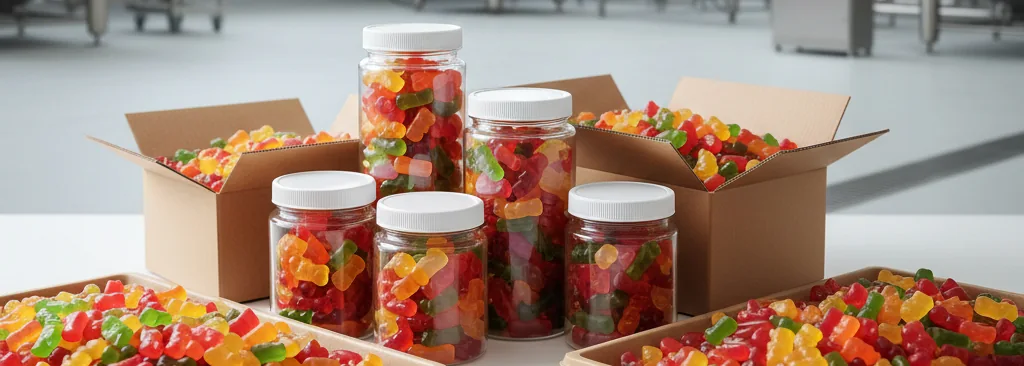
Gummies are packed into bottles, blister packs, or pouches with appropriate desiccant packets to control moisture during shelf life. Packaging materials are selected for barrier properties against moisture and oxygen. Labeling is verified for regulatory compliance, including ingredient lists, net weight, dosage instructions, and mandatory regulatory statements.
Technical Parameters Table
| Parameter | Typical Range | Notes |
|---|---|---|
| Cooking Temperature | 70–90°C | Varies by gelling agent and sugar profile |
| Brix Level (Post-Cook) | 75–82% | Higher Brix yields firmer gummies |
| Dosing Accuracy | ±2% of target weight | Achieved by servo-driven depositors |
| Cooling Temperature | 18–22°C | Humidity controlled at 40–55% RH |
| Final Moisture Content | 12–18% | Critical for shelf stability and texture |
| Drying Duration | 6–24 hours | Pectin gummies typically require longer drying |
| Single Gummy Weight | 2–6 grams | Determined by mold cavity and dosage target |
| Shelf Life | 18–24 months | Dependent on moisture, packaging, and preservatives |
Practical Insights
Production Considerations
Gummy Vitamin Manufacturing requires dedicated production lines that cannot be shared with standard confectionery products without rigorous changeover protocols. Cross-contamination risk between different active ingredients necessitates validated cleaning procedures. Production scheduling should account for setup time, cooking batch cycles, and drying duration — a single batch from formulation start to finished product typically requires 24 to 48 hours.
Quality Control
In-process quality checkpoints are more effective than end-of-line inspection alone. Monitoring Brix levels during cooking, deposit weight at the molding stage, and moisture content during drying allows operators to correct deviations before they result in out-of-specification product. Potency testing should be conducted by an independent or in-house accredited laboratory using validated analytical methods such as HPLC or UV-Vis spectrophotometry.
Scalability
Scaling from pilot batches (5–10 kg) to commercial production (500–2,000 kg per batch) requires re-validation of key parameters. Heat transfer dynamics change with batch volume, which can affect cooking uniformity. Drying times may also shift because larger batch quantities alter airflow patterns in drying rooms. A qualified contract manufacturer should have documented scale-up protocols to ensure consistency across batch sizes.
Regulatory Compliance
Gummy vitamins are classified as dietary supplements in most markets, including the United States (under FDA 21 CFR Part 111) and the European Union (under EU Food Supplements Directive 2002/46/EC). Manufacturing facilities must comply with current Good Manufacturing Practices (cGMP). Additional certifications such as ISO 22000, HACCP, and BRC provide further evidence of systematic food safety management. Labels must comply with local regulations regarding nutrient content claims, allergen declarations, and permissible ingredient lists.
B2B Decision Guide
When selecting gummy vitamin contract manufacturers for private label gummy vitamins, B2B buyers should evaluate the following criteria systematically:
- Facility Certifications: Verify that the manufacturer holds relevant GMP, ISO, HACCP, and market-specific certifications (e.g., FDA registration for U.S. distribution, HALAL/KOSHER for targeted consumer segments).
- R&D Capability: Assess whether the manufacturer offers in-house formulation development or requires the brand to provide a finished formula. The ability to reformulate for cost optimization, flavor improvement, or regulatory adaptation is a significant operational advantage.
- Minimum Order Quantity (MOQ) Flexibility: Low MOQs (starting from 10,000–30,000 units) reduce entry barriers for new brands, while high-capacity facilities (5,000+ tons annually) ensure reliability for established brands scaling to retail distribution.
- Gelling Agent Options: Confirm that the manufacturer can produce both gelatin-based and pectin-based gummies. Pectin-based formulations are necessary for vegan, halal, and vegetarian product positioning.
- Quality Assurance Infrastructure: On-site laboratories with 10,000-class cleanroom standards and validated analytical methods reduce turnaround time for batch release testing.
- Turnkey Service Scope: Full-service manufacturers that handle formulation, production, packaging design, and regulatory documentation reduce the number of vendor relationships a brand must manage.
Conclusion
The production of gummy vitamins is a precise, multi-stage process that integrates food science, chemical engineering, and quality assurance disciplines. From formulation design through cooking, depositing, drying, and packaging, each step must be controlled within defined parameters to produce a safe, consistent, and efficacious finished product. For brands seeking to enter or expand in the gummy supplement market, selecting a manufacturing partner with demonstrated technical capability, regulatory compliance, and scalable capacity is the most consequential decision in the product development process.
FAQ
What are gummy vitamins made of?
Gummy vitamins are primarily composed of a gelling agent (gelatin, pectin, or carrageenan), a sweetener system (sugar, corn syrup, or sugar alcohols), water, active vitamin or mineral ingredients, natural or artificial flavors, colors, and acidulants such as citric acid for taste balance.
How long does it take to manufacture a batch of gummy vitamins?
A single production batch typically requires 24 to 48 hours from raw material preparation through finished product packaging, with the drying stage accounting for the largest portion of elapsed time (6–24 hours depending on formulation and moisture targets).
Are gummy vitamins as effective as traditional capsules or tablets?
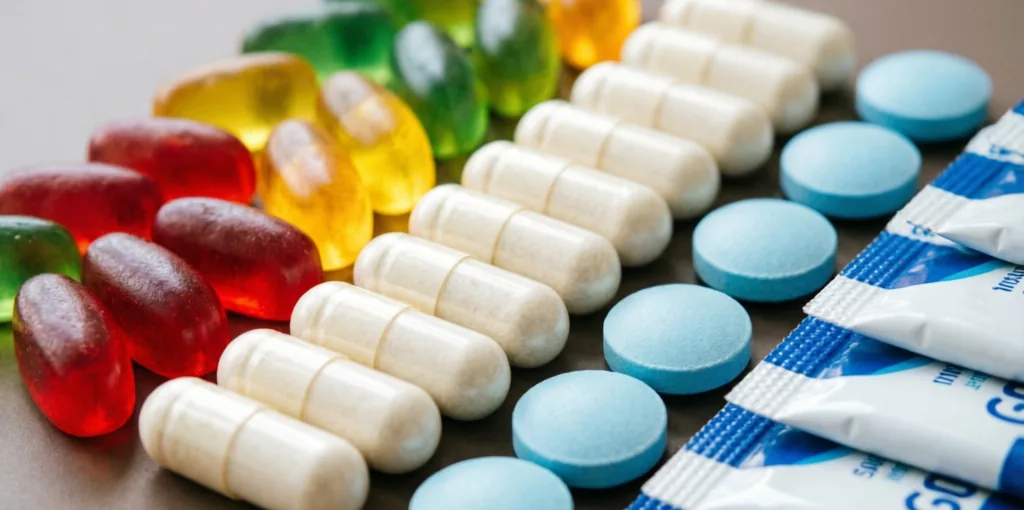
Gummy vitamins can deliver equivalent active ingredient doses when manufactured with proper dosing accuracy and potency control. However, they generally contain added sugars and may have lower nutrient density per serving compared to capsules or tablets due to the larger mass required for the gummy matrix.
Can gummy vitamins be made without gelatin?
Yes. Pectin and carrageenan are widely used as plant-based alternatives to gelatin. Pectin-based gummies are suitable for vegan, vegetarian, halal, and kosher diets, though they require adjusted cooking and drying parameters compared to gelatin formulations.
What is the typical minimum order quantity for gummy vitamin production?
MOQs vary by manufacturer but typically range from 10,000 to 50,000 units for standard formulations. Custom formulations or specialized shapes may carry higher minimums. Some manufacturers offer lower MOQs for trial or market-test runs.
How is dosage accuracy maintained in gummy vitamin production?
Dosage accuracy is controlled through precision depositing equipment that meters a specific volume of gummy mass into each mold cavity, combined with homogenous mixing of active ingredients into the gummy slurry prior to depositing. Post-production weight checks and laboratory potency testing verify that finished products meet label claims.
About Gothink Biology Technology
Shenzhen Gothink Biotech Co., Ltd. is a leading dietary supplement manufacturer based in China, providing comprehensive OEM, ODM, CMO, and CDMO services for global health brands. The company delivers end-to-end turnkey solutions spanning product consultation, formulation development, custom design, manufacturing, packaging, and marketing support.
Gothink’s R&D team is led by a co-founder and chief scientific advisor who served as a postdoctoral fellow at the California Institute of Technology, Emory University, and Ohio State University, with over 30 publications in journals including Science and PNAS. This scientific foundation supports advanced capabilities in product formulation, manufacturing process optimization, and quality assurance.
The company’s GMP-certified manufacturing facility features a 100,000-class cleanroom with a daily output of 16 tons and an annual production capacity of 5,000 tons, supported by a 10,000-class pharmaceutical-grade R&D laboratory. Gothink holds certifications including ISO 9001, ISO 22000, HACCP, FDA, HALAL, GMP, KOSHER, BRC, FSSC 22000, PJPH, and Vegan.
Gothink specializes in custom supplement manufacturing across multiple formats, including gummy, capsule, tablet, powder, liquid, and drop supplements. The company conducts formulation research on 2,000 new products annually and offers flexible MOQ structures accommodating startups, online sellers, retailers, and established brands. From small trial runs to full-scale bulk production and wholesale operations, Gothink provides scalable, customization-driven manufacturing solutions designed to bring supplement product concepts efficiently to market.