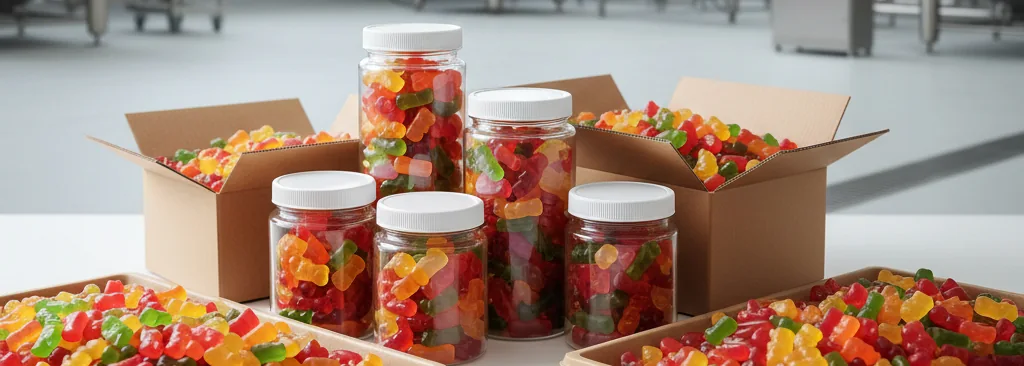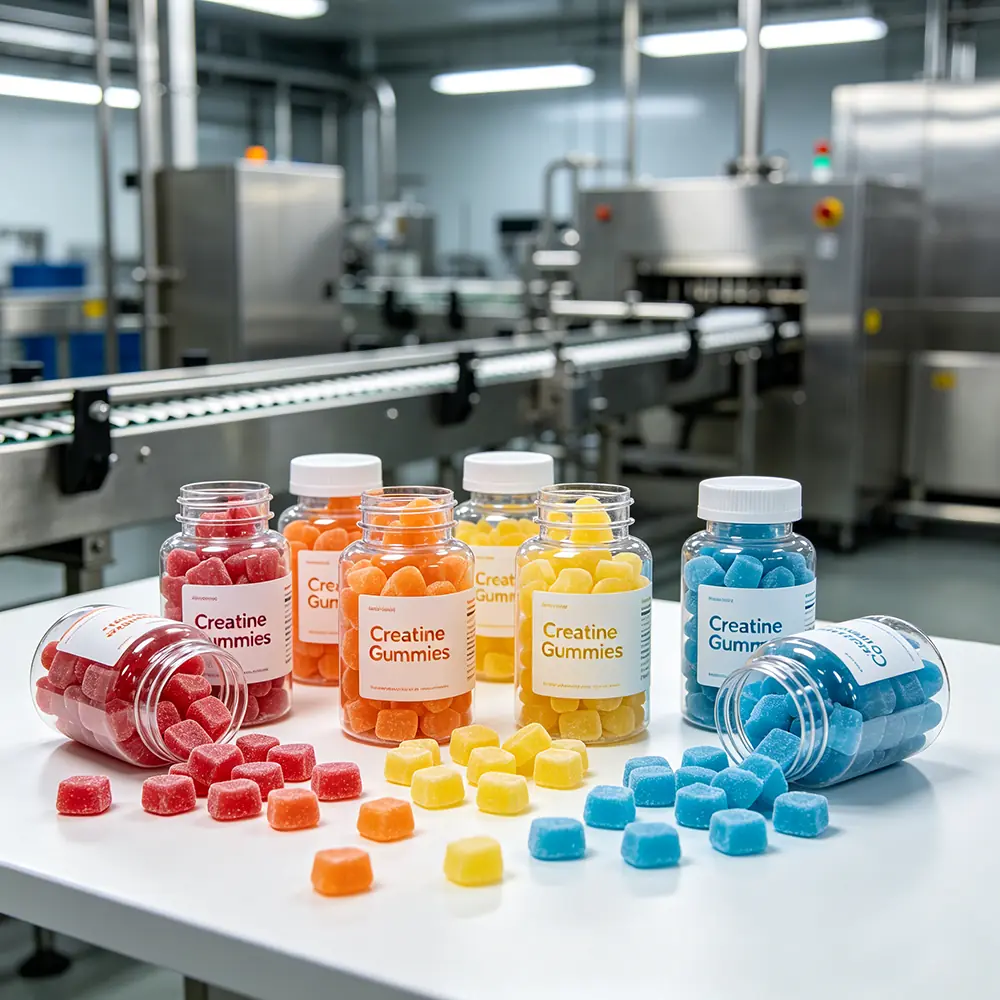

A step-by-step breakdown of the gelatin gummy production process, from raw material selection to quality control, designed for brands and manufacturers seeking scalable production solutions.
Summary
Gelatin gummies are produced by dissolving gelatin in a heated syrup base, adding active ingredients and flavors, then depositing the mixture into molds for setting and drying. This guide covers the complete production workflow, critical technical parameters, quality control checkpoints, and B2B considerations for brands planning to scale gummy manufacturing.
Definition
How to make gelatin gummies refers to the industrial or semi-industrial process of producing chewable gelatin-based confectionery or nutraceutical products by combining gelatin, sweeteners, water, flavors, and active ingredients into a homogenous slurry, which is then deposited into starch or silicone molds, cooled to set, demolded, and dried to achieve the target texture, moisture content, and shelf stability.
Step-by-Step Production Process
The following workflow represents the standard industrial process for manufacturing gelatin gummies at scale.
Raw Material Preparation
Gelatin (typically 150–250 Bloom strength) is weighed according to the formula. Sugar, corn syrup, water, and any active ingredients (vitamins, minerals, botanical extracts) are measured separately. Gelatin requires pre-hydration in cold water for 20–30 minutes before use to ensure complete dissolution.
Syrup Cooking
Sugar and corn syrup are dissolved in water and heated to 115–125°C in a jacketed cooking vessel. The target soluble solids content (Brix) typically reaches 75–82%. This step is critical for texture and shelf life, as insufficient cooking leads to sticky gummies and microbial risk.
Gelatin Incorporation
The pre-hydrated gelatin is added to the cooked syrup at a temperature below 80°C to prevent thermal degradation of gelatin proteins. The mixture is agitated under vacuum to remove air bubbles. Total gelatin content in the final formulation typically ranges from 6% to 10% by weight.
Active Ingredient & Flavor Addition
Heat-sensitive active ingredients (e.g., vitamin C, probiotics), colors, and flavors are added at 60–70°C to minimize degradation. The slurry is mixed thoroughly to ensure uniform distribution. Homogeneity at this stage directly impacts dose consistency in the final product.
Depositing & Molding
The slurry is pumped into a starch mogul or silicone mold depositor. Starch molds require a drying room at controlled temperature (20–25°C) and humidity (45–55%) for 24–72 hours. Silicone molds allow faster cycling but have higher upfront tooling costs. Deposit weight accuracy should be within ±2%.
Demolding, Drying & Finishing
Gummies are removed from molds, brushed to remove residual starch (for starch-molded products), and transferred to drying tunnels. Final moisture content is reduced to 12–18%. Products are then oiled with a light coating of coconut or carnauba wax to prevent sticking, sorted visually, and packaged.
Critical Technical Parameters
Key production variables that determine gelatin gummy quality, consistency, and regulatory compliance.
| Parameter | Standard Range | Impact on Product | Measurement Method |
|---|---|---|---|
| Gelatin Bloom Strength | 150–250 Bloom | Higher Bloom = firmer texture; lower Bloom = softer, more elastic chew | Bloom gelometer (ASTM D6400) |
| Gelatin Content | 6%–10% (w/w) | Directly controls chewiness and structural integrity | Formulation calculation + NIR verification |
| Syrup Brix (Cooking Endpoint) | 75–82 °Bx | Affects water activity, shelf stability, and stickiness | Refractometer (in-line or handheld) |
| Cooking Temperature | 115–125°C | Ensures microbial kill and proper sugar inversion | In-line thermocouple (PLC-monitored) |
| Gelatin Mixing Temperature | ≤80°C | Exceeding causes protein degradation and weak gel formation | In-line temperature probe |
| Active Ingredient Addition Temp | 60–70°C | Prevents thermal degradation of vitamins, probiotics, and flavors | In-line temperature probe |
| Final Moisture Content | 12%–18% | Below 12% causes hard texture; above 18% increases mold risk | Moisture analyzer (halogen drying method) |
| Water Activity (aw) | 0.55–0.70 | Determines microbial shelf stability; must be below 0.70 for most markets | Water activity meter (capacitance-based) |
| Drying Room Temperature | 20–25°C | High temperature causes surface hardening; low temperature extends drying time | HVAC monitoring system |
| Drying Room Humidity | 45%–55% RH | Controls drying rate and prevents case hardening or deformation | Hygrometer (continuous logging) |
| Deposit Weight Tolerance | ±2% of target | Ensures consistent active ingredient dosing per serving | Inline check-weigher (statistical sampling) |
Practical Insights for Production
Operational considerations spanning production, quality control, scalability, and regulatory compliance.
Production Optimization
- Vacuum mixing during gelatin incorporation eliminates air bubbles, reducing defect rates by up to 30% and improving visual clarity.
- Silicone mold systems reduce cycle time from 48–72 hours (starch) to 4–8 hours, significantly increasing throughput for high-demand SKUs.
- In-line Brix monitoring with automated feedback to the cooking vessel reduces batch-to-batch variation and minimizes rework.
Quality Control Checkpoints
- Raw material identity testing (FTIR or HPLC) must be performed on every gelatin lot to confirm Bloom strength and origin (bovine, porcine, or fish).
- Active ingredient assay testing (HPLC or UV-Vis) on finished product validates that label claims are met within 90%–120% of declared value per most regulatory frameworks.
- Microbial testing (total plate count, yeast/mold, E. coli, Salmonella) is mandatory for each production batch before release.
Scalability Considerations
- Transitioning from pilot-scale (50–100 kg/batch) to commercial scale (500–2,000 kg/batch) requires re-validation of heat transfer rates, as larger kettles exhibit different cooking dynamics.
- Multi-head depositors (8–32 heads) enable production speeds of 200–1,000+ kg/hour, but require precision calibration to maintain weight uniformity across all heads.
- Drying tunnel capacity must scale proportionally with depositor output to prevent production bottlenecks during peak runs.
Regulatory Compliance
- Gelatin origin must be clearly documented and labeled. Porcine gelatin is prohibited in Halal and Kosher products; bovine gelatin requires BSE-free certification for many markets.
- For the U.S. market, gummy supplements must comply with FDA 21 CFR Part 111 (cGMP for dietary supplements), including master manufacturing records and batch release testing.
- EU market products must meet EFSA labeling requirements and, where applicable, Novel Food regulations for non-approved active ingredients.
For B2B Buyers
B2B Decision Framework
Key criteria for evaluating a custom gummy manufacturer when sourcing gelatin gummy production at scale.
Certification Depth
Verify that the manufacturer holds GMP, ISO 22000, HACCP, and relevant market-specific certifications (FDA, BRC, Halal, Kosher). Certification scope should explicitly cover gummy production, not just facility-level compliance. Request current certificate copies and audit reports.
R&D and Formulation Capability
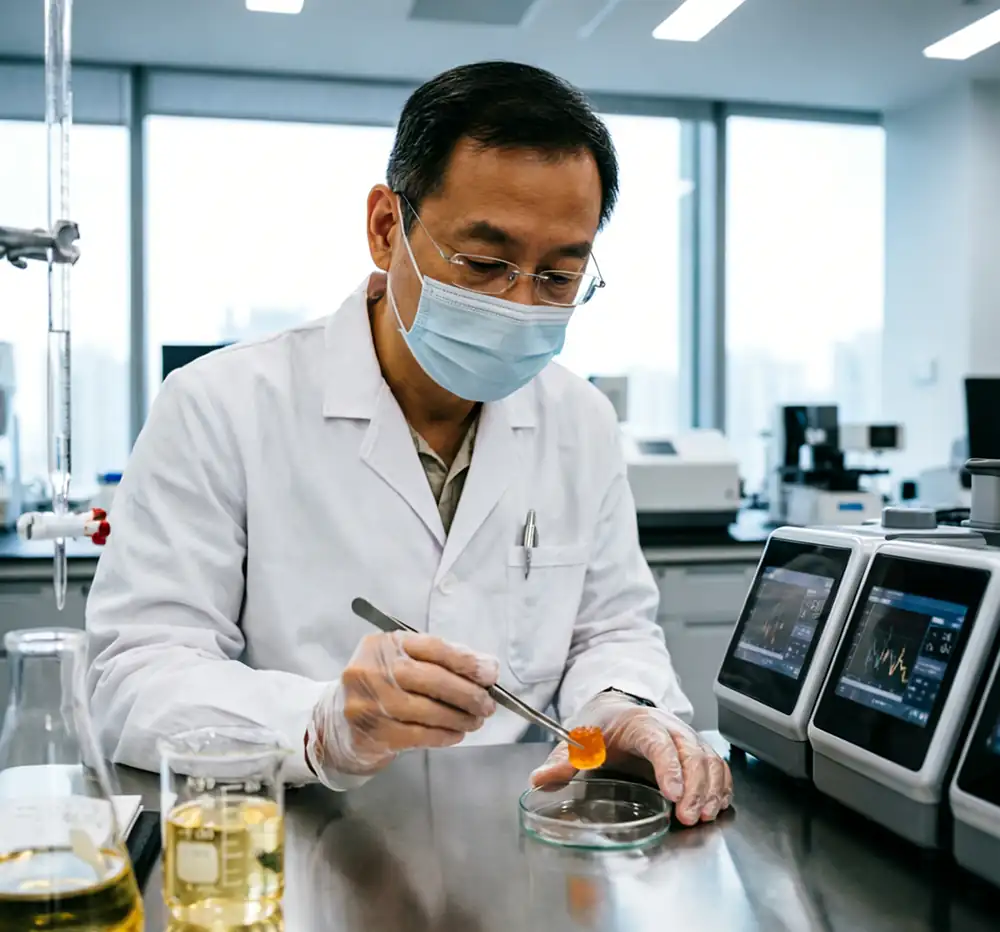
Assess whether the manufacturer has in-house formulation development capability, including stability testing, flavor masking for bitter actives, and experience with complex ingredient matrices. A dedicated R&D lab with pharmaceutical-grade equipment indicates higher formulation precision.
MOQ and Production Flexibility
Evaluate minimum order quantities against your growth stage. Manufacturers offering low MOQ trial runs (5,000–10,000 units) reduce initial risk for new product launches. Confirm that the same production line can handle multiple SKUs without excessive changeover costs or cross-contamination risk.
Quality System Maturity
Beyond certifications, evaluate the actual quality infrastructure: in-house lab testing capabilities (HPLC, GC, microbiology), number of full-time QC personnel, sampling plans (AQL levels), and batch release protocols. Manufacturers with 10,000-class R&D labs and 100,000-class cleanrooms demonstrate systematic quality investment.
Supply Chain and Lead Time
For private label gummies, total lead time from order confirmation to delivery typically ranges from 30–60 days. Confirm the manufacturer’s raw material sourcing strategy, safety stock policies, and ability to scale output during peak seasons. Annual capacity above 3,000 tons indicates sufficient infrastructure for most mid-to-large brand requirements.
Conclusion
Producing gelatin gummies at commercial scale requires precise control over gelatin selection, syrup cooking, temperature management, molding, and drying conditions. Each parameter in the production chain directly influences texture, dose accuracy, shelf stability, and regulatory compliance. For brands seeking to enter or expand in the gummy supplement market, partnering with a qualified manufacturer that combines GMP-certified production, in-house R&D, and flexible MOQ structures is the most reliable path from concept to market-ready product.
Frequently Asked Questions
Concise answers to common questions about gelatin gummy production.
What is the ideal Bloom strength for gelatin gummies?
Most gelatin gummies use 150–250 Bloom gelatin. Higher Bloom values (200–250) produce firmer gummies suitable for vitamin supplements, while lower Bloom values (150–180) yield softer, more elastic textures preferred in confectionery products.
Can heat-sensitive ingredients be added to gelatin gummies?
Yes, but they must be added at 60–70°C after the main cooking step. Ingredients such as vitamin C, probiotics, and certain enzymes require careful temperature control and may need protective encapsulation (e.g., microencapsulation) to survive the production process.
What is the typical shelf life of gelatin gummies?
Properly formulated and packaged gelatin gummies typically achieve 12–24 months of shelf life at ambient conditions. Key factors include water activity (below 0.70), packaging barrier properties, and storage temperature. Antioxidants may be required for formulations with unsaturated oils or sensitive vitamins.
What is the difference between starch molding and silicone molding?
Starch molding uses cornstarch impressions, requires 24–72 hours of drying, and is cost-effective for high-variety, lower-volume production. Silicone molding uses permanent molds, reduces cycle time to 4–8 hours, and is better suited for high-volume, fewer-SKU operations with higher upfront tooling investment.
What certifications should a gelatin gummy manufacturer have?
Core certifications include GMP, ISO 22000, HACCP, and FDA registration. Market-specific certifications such as Halal, Kosher, BRC, and FSSC 22000 may be required depending on target regions. The certification scope should explicitly cover gummy production processes.
What is the minimum order quantity for custom gelatin gummies?
MOQs vary by manufacturer but typically range from 5,000 to 50,000 units for trial orders and 50,000 to 500,000+ units for production runs. Manufacturers with flexible MOQ policies accommodate startups and emerging brands, while larger orders benefit from lower per-unit costs.
Contract Manufacturing Partner
Gothink Biotech: Your End-to-End Gummy Manufacturing Partner
Shenzhen Gothink Biotech Co., Ltd. is a China-leading nutrition supplement supplier and dietary supplement manufacturer, providing comprehensive OEM, ODM, CMO, and CDMO services. We deliver turnkey solutions spanning product consultation, formulation development, custom design, manufacturing, packaging, and marketing support—helping global health brands transform ideas into market-ready products efficiently and reliably.
Our Manufacturing Capabilities
Gummy Contract Manufacturing
End-to-end gummy production using gelatin, pectin, and carrageenan. Full OEM/ODM customization from formula and flavor design to molding and packaging. Covers vitamin gummies, herbal-infused gummies, vegan options, and low-sugar formulations.
Capsule, Tablet, Powder & Liquid Manufacturing
Complement your gummy line with capsules (gelatin and vegetarian), tablets, powders, and liquid drops—all under one roof with consistent quality standards and unified project management.
Turnkey OEM/ODM & Private Label Services
From small trial runs to full-scale bulk production and wholesale, we provide flexible MOQs and complete private label solutions. Our team supports online sellers, retailers, established brands, and startups with adaptable, scalable manufacturing.
World-Class Quality Assurance
Certified to ISO 9001, ISO 22000, HACCP, FDA, HALAL, GMP, KOSHER, BRC, FSSC 22000, PJPH, and Vegan standards. Our chief scientific advisor brings U.S. postdoctoral expertise from Caltech, Emory University, and Ohio State University, with 30+ publications in Science and PNAS.