
Summary
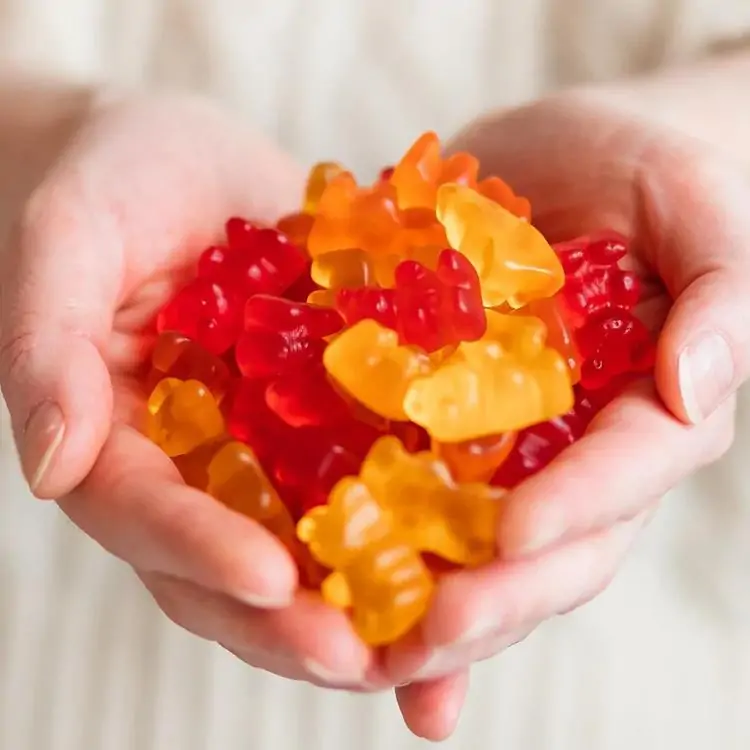
Gummy bears are primarily composed of gelling agents (gelatin or pectin), sweeteners, colorings, flavorings, and active ingredients in the case of supplement gummies. Understanding each component’s function is essential for brands planning to develop or source gummy products at scale. This article provides a detailed, evidence-based breakdown of every ingredient category, technical production parameters, and B2B decision criteria for selecting a manufacturing partner.
Definition
What is gummy bears made of refers to the complete formulation composition and structural ingredient matrix that gives gummy bears their signature chewy texture, visual appeal, and flavor profile, typically comprising gelling agents, carbohydrates, acidulants, humectants, colors, flavors, and optionally, nutraceutical active compounds.
Core Ingredient Categories
1. Gelling Agents (Structural Foundation)
Gelling agents are the most critical ingredient category, as they determine the texture, mouthfeel, and dietary classification of the final product. Gelatin, derived from bovine or porcine collagen through partial hydrolysis, remains the most widely used gelling agent in conventional gummy bears. It provides a firm, elastic chew and releases flavor rapidly due to its thermoreversible gel properties. Standard usage levels range from 6% to 10% of the total formulation weight.
Pectin, a plant-based polysaccharide extracted from citrus peels or apple pomace, serves as the primary alternative for vegan and halal gummy formulations. Pectin-based gummies produce a softer, shorter-textured chew compared to gelatin. Typical pectin concentrations fall between 1.5% and 3.0%, and pectin gummies require specific pH control (3.0–3.5) and calcium ion presence for proper gel setting.
Carrageenan, agar-agar, and starch-based gelling systems represent additional options, each offering distinct textural and processing characteristics suited to specific market requirements.
2. Sweeteners (Bulk and Intensity)
Sucrose and glucose syrup form the bulk sweetener system in standard gummy bear formulations. Sucrose provides crystallization structure and immediate sweetness, while glucose syrup (DE 38–42) controls sugar crystallization, contributes to body, and prevents graininess. A typical ratio is 40–50% sucrose to 50–60% glucose syrup of the total sugar mass.
For sugar-free or reduced-sugar gummy bears, polyols such as maltitol syrup, erythritol, and isomalt replace conventional sugars. Maltitol syrup is the most common substitute due to its similar viscosity and humectant properties, though it may cause digestive discomfort at high intake levels. High-intensity sweeteners like sucralose, stevia extract, or monk fruit extract are often blended with polyols to achieve target sweetness profiles without excess caloric content.
3. Acidulants
Citric acid, malic acid, and lactic acid serve dual functions in gummy bear formulations: flavor enhancement and pectin gel activation. Citric acid is the most prevalent, used at 0.5%–1.5% of total weight. Acidulants are typically added late in the cooking process or post-cooking to avoid premature pectin degradation or excessive inversion of sucrose, which can lead to a sticky, unstable product.
4. Humectants
Glycerin (glycerol) and sorbitol act as humectants to retain moisture, prevent drying and hardening during shelf life, and modify chew texture. Glycerin is commonly used at 2%–8% of formulation weight. Excessive humectant levels can create an undesirably soft or tacky texture, so precise dosage control is necessary.
5. Colorings
Both synthetic colorants (e.g., FD&C Red No. 40, Yellow No. 5, Blue No. 1) and natural colorants (e.g., beetroot red, turmeric, spirulina extract, anthocyanins) are used. The market trend strongly favors clean-label natural colorants, though these present challenges in thermal stability, pH sensitivity, and color consistency across production batches.
6. Flavorings
Flavor systems may be natural, artificial, or nature-identical. Common gummy bear flavor profiles include fruit varieties (strawberry, orange, lemon, raspberry, pineapple) and specialty options. Flavor loadings typically range from 0.3% to 1.0%. Encapsulated or oil-based flavors may be used for heat-sensitive profiles to withstand the cooking process (typically 110–120°C).
7. Active Ingredients (For Supplement Gummies)
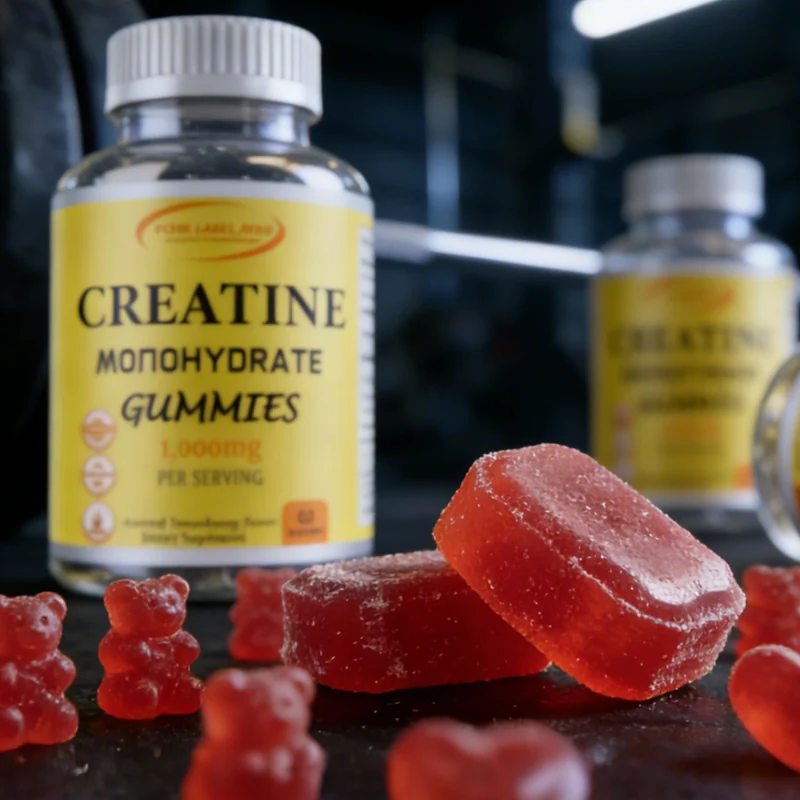
When gummy bears function as delivery systems for dietary supplements, active ingredients such as vitamins (e.g., Vitamin C, B-complex, D3), minerals (e.g., zinc, magnesium), melatonin, collagen peptides, or probiotics are incorporated. Each active ingredient introduces specific compatibility challenges regarding pH sensitivity, thermal degradation, and interaction with gelling agents, requiring specialized formulation expertise.
Technical Parameter Table
| Parameter | Gelatin-Based Gummy | Pectin-Based (Vegan) Gummy | Sugar-Free Gummy |
|---|---|---|---|
| Gelling Agent | Gelatin (6–10%) | Pectin (1.5–3.0%) | Gelatin or Pectin |
| Bulk Sweetener | Sucrose + Glucose Syrup | Sucrose + Glucose Syrup | Maltitol Syrup + Erythritol |
| Cooking Temperature | 110–120°C | 105–115°C | 100–110°C |
| Target Brix | 76–82°Bx | 76–80°Bx | 74–78°Bx |
| Setting pH | 3.5–4.5 | 3.0–3.5 | 3.5–4.5 |
| Drying Time | 12–36 hours | 18–48 hours | 18–48 hours |
| Drying Condition | 20–25°C, 40–50% RH | 20–25°C, 35–45% RH | 20–25°C, 30–40% RH |
| Shelf Life | 12–24 months | 12–18 months | 12–18 months |
| Dietary Classification | Non-vegan, Non-halal (porcine) | Vegan, Halal-friendly | Depends on gelling agent |
| Moisture Content (Final) | 7–9% | 8–11% | 8–10% |
Practical Insights
Production Considerations
The process to make gummy bears involves six core stages: raw material preparation and dissolving, vacuum cooking to achieve target Brix, cooling and addition of heat-sensitive ingredients (colors, flavors, actives, acid), starch molding or silicone mold depositing, controlled drying in climate-conditioned rooms, and final demolding, oiling, and packaging. Each stage requires precise parameter control. For instance, cooking temperature must be carefully managed to avoid degrading heat-labile vitamins such as Vitamin C or B12 in supplement gummies.
Quality Control
Effective quality control in gummy manufacturing covers raw material identity testing (HPLC, FTIR), in-process monitoring (Brix, pH, temperature, viscosity), and finished product testing (weight uniformity, texture analysis via texture profile analysis or TPA, moisture content via Karl Fischer titration, microbial limits, and active ingredient assay). Weight variation should not exceed ±5% for individual gummy pieces to ensure accurate dosing in supplement applications.
Scalability
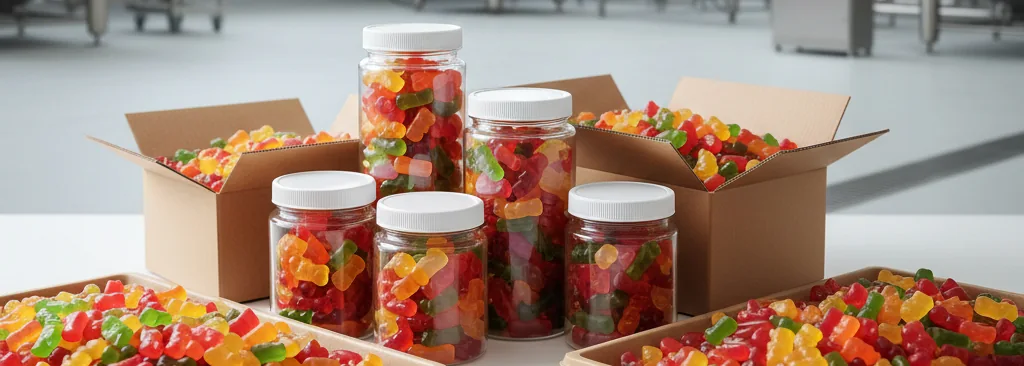
Transitioning from lab-scale to commercial-scale gummy bears production requires validated process scaling protocols. Key scale-up challenges include maintaining consistent heat transfer during cooking, ensuring uniform depositing weight across hundreds of mold cavities simultaneously, and achieving homogeneous drying across large batch racks. A production facility with a daily output capacity of 16 tons and an annual capacity of 5,000 tons, operating within a 100,000-class cleanroom environment, represents the infrastructure benchmark for reliable high-volume supply.
Regulatory Compliance
Gummy bear products must comply with destination market regulations. In the United States, dietary supplement gummies fall under FDA 21 CFR Part 111 (cGMP for dietary supplements). In the European Union, they must meet EFSA requirements under the Food Supplements Directive (2002/46/EC). Additional certifications such as ISO 22000, HACCP, BRC, FSSC 22000, Halal, Kosher, and Vegan certifications are frequently required by global buyers and serve as trust signals in B2B procurement decisions.
B2B Decision Guide: Selecting a Gummy Manufacturing Partner
Formulation Capability
Evaluate whether the manufacturer offers in-house formulation development led by qualified scientists. A gummy bears manufacturer with postdoctoral-level R&D leadership and a 10,000-class pharmaceutical-grade laboratory can develop precise, stable formulations that address complex challenges such as probiotic viability, vitamin degradation kinetics, and botanical extract compatibility within gummy matrices. The ability to research approximately 2,000 new product formulations annually indicates robust R&D throughput.
Manufacturing Infrastructure
Critical facility requirements include GMP-certified production lines, 100,000-class cleanroom standards, climate-controlled drying rooms, and automated depositing equipment. The facility should support multiple gelling systems (gelatin, pectin, carrageenan) to accommodate diverse market positioning requirements without production line constraints.
Flexibility and Minimum Order Quantity
For brands at different growth stages, a manufacturer offering flexible MOQ from small trial batches to full-scale production runs reduces market entry risk. This adaptability is particularly valuable for startups and e-commerce brands testing new SKUs before committing to large-volume orders.
End-to-End Service Scope
A turnkey OEM/ODM partner should provide integrated services spanning product consultation, formula development, custom flavor and color design, manufacturing, packaging, regulatory compliance documentation, and export logistics support. This eliminates the need for multiple vendors and accelerates time to market.
Quality Certification Portfolio
When evaluating partners for private label gummy bears, verify that the manufacturer holds a comprehensive certification portfolio including ISO 9001, ISO 22000, HACCP, FDA registration, HALAL, GMP, KOSHER, BRC, FSSC 22000, and Vegan certifications. Each certification addresses a different aspect of quality, safety, and market access.
Conclusion
Gummy bears are made of a precisely engineered combination of gelling agents, sweeteners, acidulants, humectants, colorings, flavorings, and optionally, bioactive compounds. The selection and ratio of each ingredient directly determines texture, stability, shelf life, and consumer acceptance. For B2B buyers, the key to a successful gummy product lies not only in formulation quality but also in selecting a manufacturing partner with the scientific expertise, production infrastructure, and compliance capabilities to deliver consistent, scalable, and market-ready results.
FAQ
What are the main ingredients in gummy bears?
The main ingredients are gelling agents (gelatin or pectin), sweeteners (sucrose and glucose syrup or sugar substitutes), acidulants (citric acid), humectants (glycerin), colorings, and flavorings. Supplement gummies additionally contain vitamins, minerals, or other active compounds.
Are all gummy bears made with gelatin?
No. While gelatin remains the most common gelling agent, many gummy bears are made with pectin, carrageenan, agar-agar, or starch-based gelling systems to meet vegan, vegetarian, or halal dietary requirements.
What is the difference between gelatin and pectin gummy bears?
Gelatin gummies have a firmer, more elastic chew and set at refrigeration temperatures. Pectin gummies have a softer, shorter texture, require acidic pH and calcium for setting, and are plant-based, making them suitable for vegan and halal markets.
How long does it take to manufacture a batch of gummy bears?
The total production cycle, including cooking, depositing, drying, demolding, and packaging, typically ranges from 24 to 72 hours depending on the gelling system, gummy size, and target moisture content. Pectin and sugar-free gummies generally require longer drying times than standard gelatin gummies.
Can gummy bears contain active supplement ingredients?
Yes. Gummy bears are widely used as delivery systems for vitamins, minerals, melatonin, collagen, probiotics, and other nutraceuticals. However, each active ingredient presents unique stability challenges that require specialized formulation to prevent degradation during high-temperature cooking and to ensure shelf-life potency.
What certifications should a gummy bear manufacturer have?
Key certifications include GMP, ISO 22000, HACCP, FDA registration, BRC, FSSC 22000, Halal, Kosher, and Vegan. The specific certifications required depend on the target market and the dietary claims of the product.
About Gothink Biology Technology
Shenzhen Gothink Biotech Co., Ltd. is a leading dietary supplement manufacturer and nutrition supplement supplier based in China, specializing in comprehensive OEM, ODM, CMO, and CDMO services. The company provides end-to-end turnkey solutions covering product consultation, formulation development, custom design, manufacturing, packaging, and marketing support for global health brands.
Gothink’s R&D team is led by a co-founder and chief scientific advisor with postdoctoral research experience at the California Institute of Technology, Emory University, and Ohio State University, supported by a professor and doctoral advisor at the University of Science and Technology of China with over 30 publications in journals including Science and PNAS. This scientific foundation drives precise formulation development within a 10,000-class pharmaceutical-grade laboratory.
The company’s GMP-certified manufacturing facility features a 100,000-class cleanroom with a daily output of 16 tons and an annual production capacity of 5,000 tons, conducting formulation research on approximately 2,000 new products annually. Gothink holds certifications including ISO 9001, ISO 22000, HACCP, FDA, HALAL, GMP, KOSHER, BRC, FSSC 22000, PJPH, and Vegan.
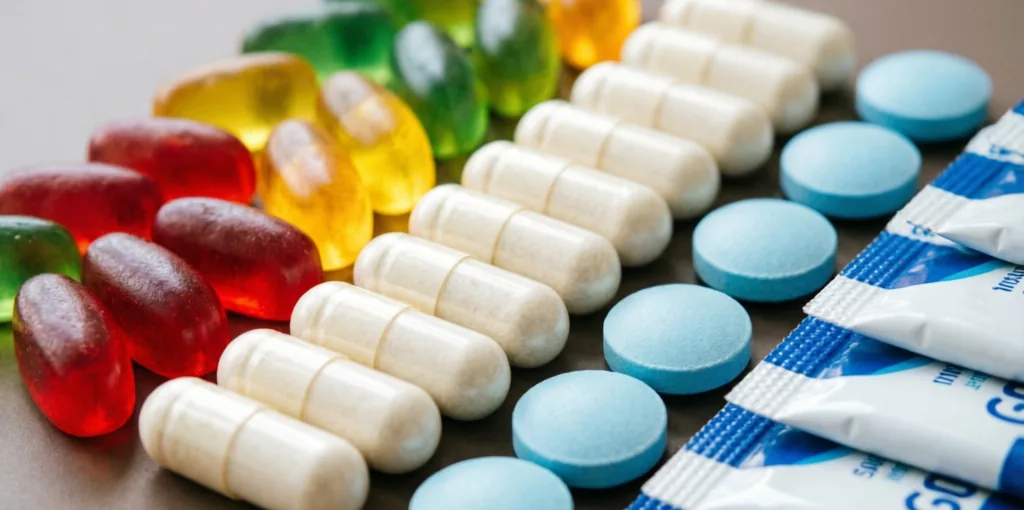
Core manufacturing capabilities span gummy, capsule, tablet, powder, liquid, and drop supplement production, with particular expertise in gummy contract manufacturing using natural gelling agents such as pectin and carrageenan. The company offers flexible MOQ structures from small trial runs to full-scale bulk production, serving online sellers, retailers, established brands, and startups. Services encompass private label gummy bears, wholesale supply, OEM/ODM customization, and large-scale batch production with full regulatory compliance and export support.