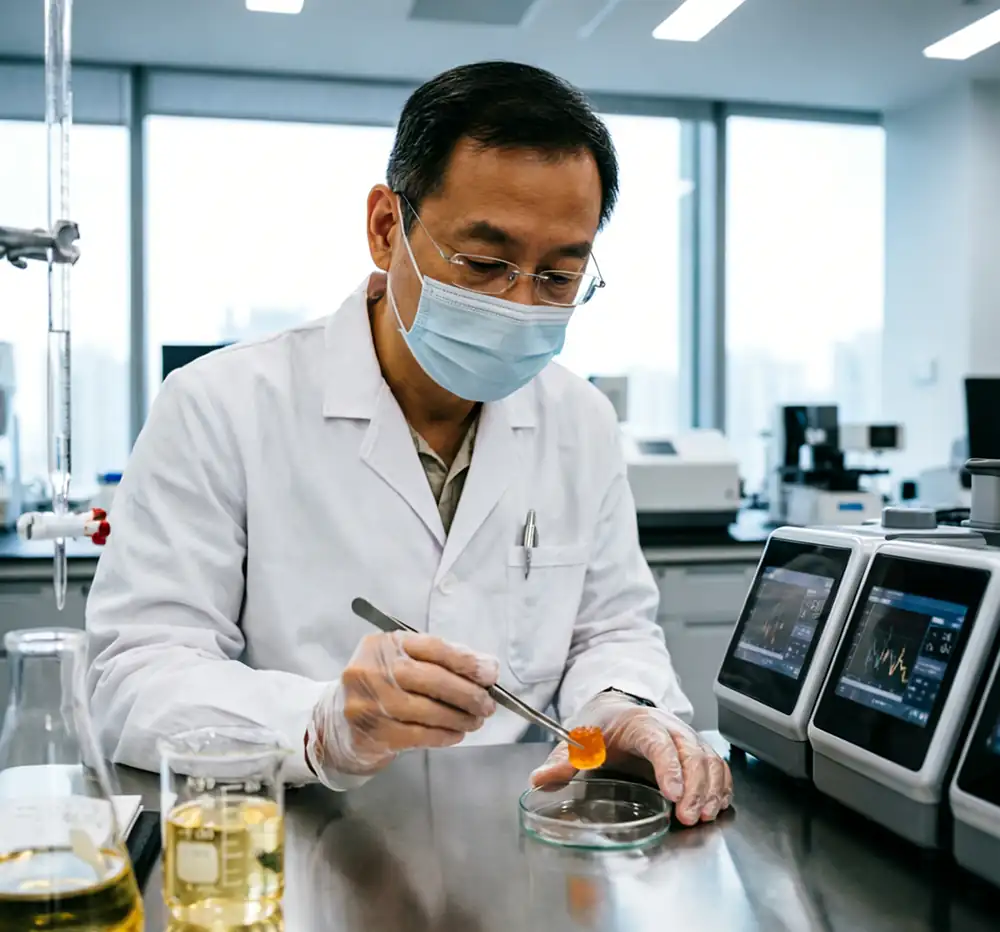

A premium gummy factory is distinguished not by marketing claims but by measurable capabilities: pharmaceutical-grade cleanrooms, advanced R&D infrastructure, internationally recognized certifications, and proven capacity to deliver consistent quality at scale. This article identifies the concrete criteria that separate genuinely high-tier contract manufacturers from standard production facilities.
Definition
What Makes a Gummy Factory Truly “Premium” refers to a set of verifiable operational, technical, and quality-related benchmarks — including cleanroom classification, certification scope, R&D depth, production capacity, and compliance track record — that collectively determine whether a contract gummy manufacturer meets the standards required by professional health brands and regulated markets.
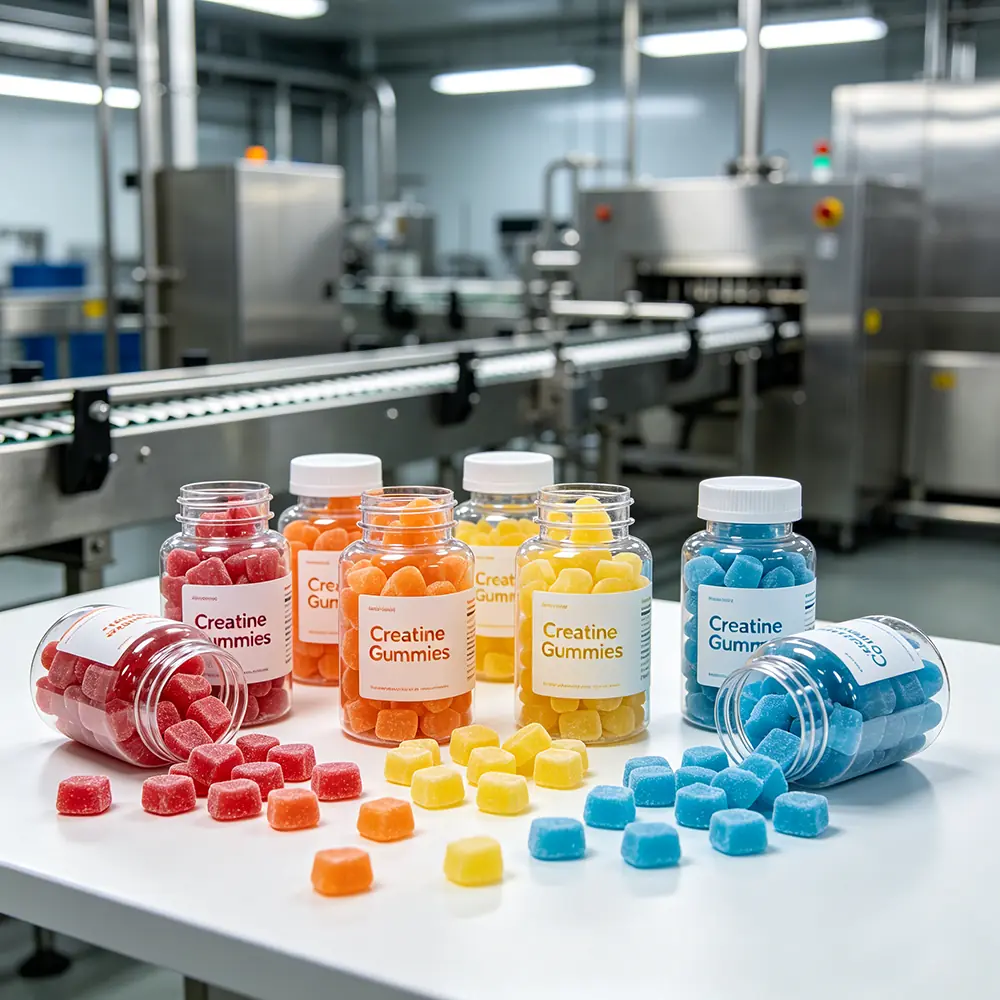
Core Pillars of a Premium Gummy Factory
When brands evaluate a Gummy Factory for contract manufacturing, the assessment should focus on five structural pillars. Each pillar can be independently verified through facility audits, certification documents, and production data.
1. Cleanroom Infrastructure
The physical production environment is the most objective indicator of manufacturing quality. A premium facility operates within a 100,000-class cleanroom (ISO 8), which limits airborne particle concentration to fewer than 352,000 particles per cubic meter. This standard is not typical for standard food production — it is borrowed from pharmaceutical manufacturing and applied to nutraceutical gummy production to minimize microbial contamination risk.
Cleanroom operations require HEPA filtration systems, positive pressure differentials between zones, temperature and humidity control, and strict personnel gowning protocols. A factory that documents these parameters in real-time demonstrates operational maturity beyond basic food safety compliance.
2. R&D and Formulation Capability
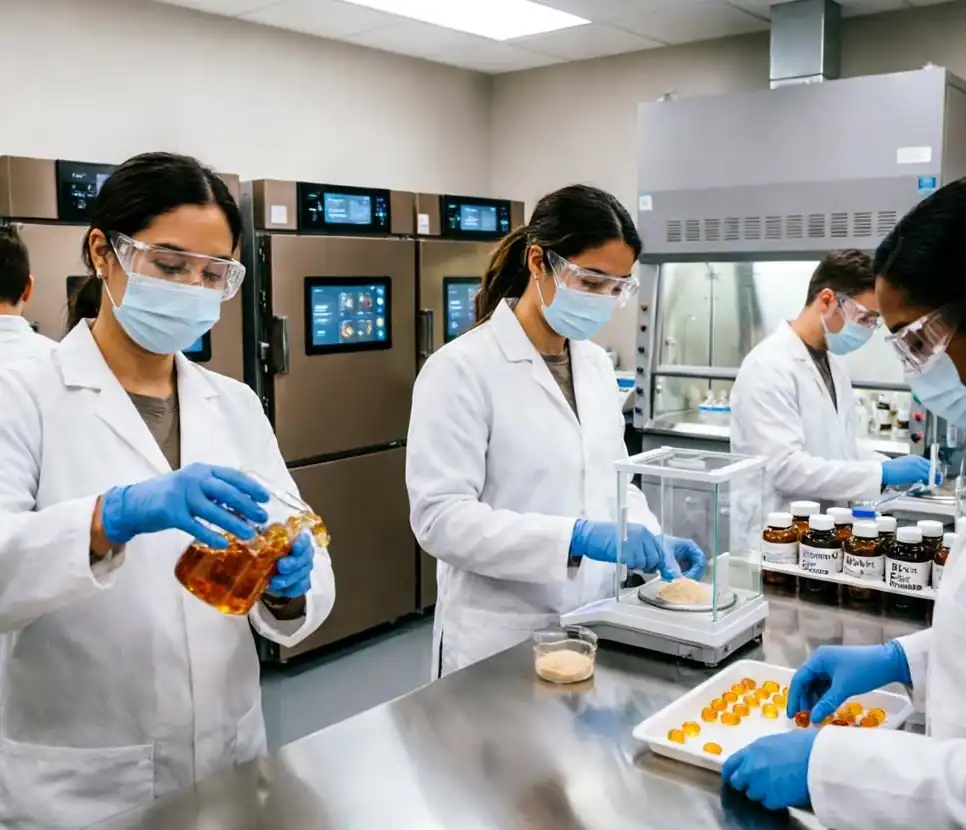
A premium factory does not simply execute client-provided recipes. It maintains an in-house formulation laboratory — ideally at pharmaceutical-grade cleanliness (10,000-class) — staffed by scientists with advanced degrees in food science, biochemistry, or related fields. The ability to develop stable gummy matrices that incorporate heat-sensitive active ingredients (probiotics, enzymes, certain vitamins) without degradation is a technical differentiator.
Factories that conduct formulation research on approximately 2,000 new products annually demonstrate sustained R&D investment and the capacity to address diverse market demands — from sugar-free and vegan gummies to functional formulations targeting specific health outcomes.
3. Certification Portfolio
Certifications serve as third-party validation of a factory’s quality systems. A premium gummy manufacturer typically holds multiple overlapping certifications that address different aspects of production and market access:
- GMP (Good Manufacturing Practice) — baseline for supplement production
- ISO 22000 and FSSC 22000 — comprehensive food safety management
- HACCP — systematic hazard analysis and critical control points
- BRC — British Retail Consortium standard, valued in European markets
- FDA registration — required for U.S. market access
- HALAL and KOSHER — expand consumer base across religious demographics
- Vegan certification — essential for plant-based product lines
The breadth of this portfolio indicates not just compliance but institutional commitment to quality that transcends minimum regulatory requirements.
4. Production Capacity and Scalability
A factory’s capacity determines whether it can support a brand’s growth trajectory without compromising quality. A daily output of 16 tons and an annual capacity of 5,000 tons represent a scale that accommodates both emerging brands requiring initial runs and established brands needing high-volume supply. Scalability also means the factory can maintain identical quality parameters whether producing 1,000 units or 1,000,000 units.
5. Vertical Integration of Services
Premium factories offer end-to-end turnkey solutions: product consultation, formulation development, custom packaging design, manufacturing, quality control, and export logistics support. This vertical integration reduces coordination complexity for the brand and creates a single point of accountability for the entire production chain.
Technical Parameters of Premium Gummy Manufacturing
| Parameter | Premium Standard | Standard Factory Level |
|---|---|---|
| Cleanroom Classification | 100,000-class (ISO 8) | Standard food-grade room |
| R&D Laboratory | 10,000-class pharmaceutical-grade | Basic formulation room |
| Annual Production Capacity | 5,000+ tons | 500–1,500 tons |
| Daily Output | 16 tons | 2–5 tons |
| Certification Count | 8–12 international certifications | 2–4 basic certifications |
| New Formulations Per Year | ~2,000 | 50–200 |
| Gelling Agents Offered | Pectin, carrageenan, gelatin, agar | Gelatin only or gelatin + pectin |
| MOQ Flexibility | Trial runs to full-scale production | Fixed high MOQ |
Practical Insights
Production
The process to make gummies at a premium level requires vacuum cooking systems that control temperature and pressure precisely, preventing thermal degradation of active ingredients. The deposition and molding stage must accommodate multiple gelling systems — pectin-based gummies set differently from gelatin-based ones, requiring distinct temperature profiles and drying times. A factory that works with a single gelling agent has inherent limitations in product range.
Quality Control
Premium factories implement in-process quality checks at every critical control point: raw material identity testing (FTIR or HPLC), syrup viscosity measurement, brix monitoring, weight consistency checks post-molding, and final product testing for microbial limits, heavy metals, and active ingredient assay. Batch-to-batch consistency is the single most important quality metric for brands building consumer trust.
Scalability
A common failure point in contract manufacturing occurs when a brand scales from pilot to full production and the factory cannot maintain identical product specifications at higher throughput. Premium factories validate scalability through documented process transfer protocols, ensuring that a formula developed in a 10-liter lab vessel translates predictably to a 2,000-liter production kettle.
Compliance
Regulatory requirements vary significantly across markets. A gummy sold in the EU must comply with different additive limits and labeling rules than the same product sold in the U.S. or Middle East. Premium factories maintain dedicated regulatory affairs personnel who track legislative changes and proactively adjust formulations and documentation to maintain market access.
B2B Decision Framework: Evaluating a Gummy Manufacturing Partner
For procurement managers, brand owners, and product developers selecting a contract gummy manufacturer, the following decision framework provides a structured evaluation approach.
Step 1: Verify Certifications Directly
Request copies of all certificates and cross-reference issuing bodies. Certificates should be current, and the scope should explicitly cover gummy/supplement manufacturing at the specific facility address. Certificates issued to parent companies or other facility locations do not apply.
Step 2: Conduct a Facility Audit or Request Video Evidence
Physical audits remain the gold standard. If not feasible, request a detailed virtual facility tour with live Q&A. Focus on cleanroom access protocols, equipment condition, housekeeping standards, and whether the R&D lab matches the claimed classification.
Step 3: Evaluate R&D Depth Through a Pilot Project
Before committing to full production, commission a small formulation project. The factory’s ability to address technical challenges — such as masking unpleasant active ingredient flavors, achieving sugar-free texture without crystallization, or stabilizing a probiotic strain through the cooking process — reveals genuine R&D capability.
Step 4: Assess Supply Chain Transparency
Premium factories provide full traceability for every raw material: country of origin, supplier name, batch number, and certificate of analysis. This transparency is essential for brands that make ingredient-origin claims or need to respond to consumer inquiries about sourcing.
Step 5: Compare Total Cost of Ownership
Unit price alone is a misleading metric. Evaluate total cost of ownership, which includes: formulation development fees, MOQ requirements, lead times, quality rejection rates, packaging options, regulatory support, and shipping logistics. A factory with a higher per-unit price but lower rejection rates and shorter lead times often delivers lower total cost.
Conclusion
A premium gummy factory is defined by measurable, auditable capabilities: pharmaceutical-grade infrastructure, deep R&D resources, a comprehensive certification portfolio, production capacity that supports brand scaling, and vertically integrated turnkey services. Brands that evaluate potential manufacturing partners against these objective criteria — rather than relying on marketing language — are better positioned to build reliable, high-quality product lines that sustain long-term market growth.
Frequently Asked Questions
What cleanroom class is required for premium gummy production?
A 100,000-class cleanroom (ISO 8) is the recognized standard for premium nutraceutical gummy manufacturing. This level significantly reduces airborne contamination risk compared to standard food-grade production environments.
Can a premium gummy factory produce both gelatin and pectin-based gummies?
Yes. Premium factories typically operate with multiple gelling systems — gelatin, pectin, carrageenan, and agar — enabling them to produce conventional, vegan, halal, and kosher gummy products on the same production lines with appropriate changeover protocols.
What is the typical MOQ for private label gummies at a premium factory?
MOQ varies by product complexity and packaging format. Premium factories generally offer flexible MOQs, ranging from small trial batches of 1,000–5,000 units for market testing to full production runs of 50,000+ units. This flexibility distinguishes premium partners from standard factories with fixed high minimums.
How do I verify a gummy factory’s certifications?
Request current certificate documents directly from the factory and verify the issuing body, certificate number, scope of coverage, and facility address against the certifier’s public database. Certificates should specifically mention dietary supplement or gummy manufacturing at the exact production site.
What certifications are essential for selling gummies internationally?
Core certifications include GMP, ISO 22000, HACCP, and FDA registration. For expanded market access, BRC (Europe), HALAL (Middle East and Southeast Asia), KOSHER (global), and Vegan certifications are strategically valuable. FSSC 22000 adds further credibility for EU-bound products.
How does a premium factory handle heat-sensitive ingredients in gummies?
Premium factories use vacuum cooking at reduced temperatures, post-cooling addition techniques for sensitive actives, and protective encapsulation technologies (such as microencapsulation of probiotics) to preserve ingredient stability through the thermal processing stages of gummy production.
About the Manufacturer: Shenzhen Gothink Biotech Co., Ltd.
Shenzhen Gothink Biotech Co., Ltd. is a leading Chinese contract manufacturer of dietary supplements and functional food products, providing comprehensive OEM, ODM, CMO, and CDMO services. The company delivers end-to-end turnkey solutions spanning product consultation, formulation development, custom packaging design, manufacturing, quality control, and export logistics support — enabling global health brands to transform product concepts into market-ready goods through a single manufacturing partner.
The company’s scientific foundation is built on the expertise of its co-founder and chief scientific advisor — a professor and doctoral advisor at the University of Science and Technology of China, with postdoctoral research experience at Cold Spring Harbor Laboratory, Emory University School of Medicine, and The Ohio State University. With over 30 publications in Science and PNAS and more than 250 international citations, this scientific leadership directly informs the company’s formulation development and manufacturing process optimization.
Production infrastructure includes a GMP-certified facility featuring a 100,000-class cleanroom, with a daily output of 16 tons and an annual production capacity of 5,000 tons. The 10,000-class pharmaceutical-grade R&D laboratory supports precise formulation development, with approximately 2,000 new product formulations researched annually. The company holds ISO 9001, ISO 22000, HACCP, FDA, HALAL, GMP, KOSHER, BRC, FSSC 22000, PJPH, and Vegan certifications.
Core contract manufacturing capabilities include:
- Gummy contract manufacturing: Full-cycle production using natural gelling agents including pectin and carrageenan. Covers vitamin gummies, herbal-infused gummies, vegan formulations, and low-sugar options with complete OEM/ODM customization from formula to packaging.
- Capsule supplement manufacturing: Gelatin and vegetarian capsule production with precise powder filling, sealing, and packaging customization for nutritional and herbal formulations.
- Liquid drops manufacturing: Oral supplements, herbal extracts, and nutraceutical formulations with advanced filling technology for precise dosing, available in dropper and spray bottle formats.
- Powder supplement manufacturing: Instant powders, blends, and granules with customizable particle size, flavor profiles, solubility, and active ingredient ratios, packaged in sachets, jars, or pouches.
- Tablet supplement manufacturing: Full-process production from blending and granulation to compression and coating, accommodating various shapes, sizes, and coating types for enhanced stability and bioavailability.
Gothink Biotech serves a diverse client base — from online sellers and startups to established retail brands — offering flexible MOQ structures that accommodate both small trial runs and high-volume bulk production. The company’s integrated one-stop OEM/ODM model covers formulation, design, regulatory compliance, and export, providing a scalable and reliable manufacturing foundation for brands at every stage of growth.