
Abstract
Starting a supplement company requires a structured approach covering market research, regulatory compliance, formulation development, and reliable manufacturing partnerships. This guide outlines each critical step and provides actionable insights for entrepreneurs entering the dietary supplement industry.
What Is a Supplement Company?
How to start a supplement company refers to the systematic process of establishing a business that designs, produces, and sells dietary supplements—products intended to complement the diet and support health. A supplement company may develop its own proprietary formulas or leverage existing formulations through contract manufacturing arrangements.
Step-by-Step Process to Launch a Supplement Company
Step 1: Conduct Market Research and Identify a Niche
The dietary supplement market is highly competitive. Successful entrants typically target a specific niche, such as sports nutrition, immune support, cognitive health, or women’s wellness. Market research should include competitor product analysis, pricing benchmarks, consumer demand trends, and gap identification. Data from industry reports and retail platform bestseller lists provide a factual basis for niche selection.
Step 2: Develop a Business Plan
A business plan defines the company’s structure, target audience, pricing strategy, distribution channels, and financial projections. Key elements include estimated startup costs (typically ranging from $10,000 to $100,000+ depending on scale), projected unit economics, and a go-to-market timeline. The plan should also specify whether the business model will focus on direct-to-consumer (DTC) e-commerce, wholesale distribution, or both.
Step 3: Understand and Ensure Regulatory Compliance
In the United States, dietary supplements are regulated under the Dietary Supplement Health and Education Act (DSHEA) of 1994. Compliance requirements include facility registration with the FDA, adherence to Current Good Manufacturing Practices (cGMP), proper labeling under 21 CFR Part 111, and submission of a New Dietary Ingredient (NDI) notification if the product contains ingredients not marketed before October 1994. Non-compliance carries significant legal and financial risk, including product seizure and injunctions.
Step 4: Formulate Your Product
Product formulation can be developed in-house by a qualified formulator or sourced from a contract manufacturer’s existing formula library. Critical considerations include clinically studied ingredient dosages, ingredient bioavailability, flavor systems (for gummies and powders), and stability testing. Each ingredient should have a Certificate of Analysis (COA) from a qualified supplier verifying identity, purity, and potency.
Step 5: Select a Manufacturing Partner
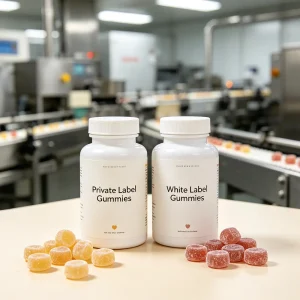
Most new supplement brands do not own manufacturing facilities. Instead, they partner with contract manufacturers that offer OEM (Original Equipment Manufacturing) or ODM (Original Design Manufacturing) services. A private label supplement arrangement allows brands to apply their branding to pre-formulated products, reducing development time and cost. Key selection criteria include GMP certification, production capacity, minimum order quantity (MOQ) flexibility, and quality assurance capabilities.
Step 6: Design Branding and Packaging
Packaging must comply with FDA labeling regulations, including a Supplement Facts panel, net quantity statement, identity statement, and responsible party information. Brand design should differentiate the product on shelf and online while maintaining regulatory accuracy. Claims on packaging must be structured within FTC and FDA guidelines—only “structure/function” claims are permitted without prior FDA approval, and they must include the mandatory disclaimer.
Step 7: Establish Distribution and Sales Channels
Distribution strategies typically combine DTC sales through owned websites (Shopify, WooCommerce) and third-party marketplaces (Amazon) with wholesale partnerships involving retailers, gyms, and healthcare practitioners. Each channel has distinct margin structures, fulfillment requirements, and marketing dynamics that should be modeled before launch.
Step 8: Implement Quality Control and Post-Market Monitoring
Ongoing quality control includes batch-level testing for identity, purity, strength, and contamination. Post-market obligations include maintaining adverse event reporting logs, conducting annual product reviews, and updating labels as regulations evolve. Third-party testing certifications (such as NSF or USP) add credibility and consumer trust.
Practical Insights Across Key Operational Dimensions
Production
Production format selection—gummies, capsules, tablets, powders, or liquids—directly impacts manufacturing complexity, cost per unit, and consumer preference. Gummies require specialized equipment for temperature-controlled molding and drying. Capsules and tablets are more cost-effective at scale but require precise blending and compression processes. Powder manufacturing offers flexibility in dosage customization but demands rigorous control over particle size and solubility.
Quality Control
A robust quality control system operates at three stages: incoming raw material verification, in-process monitoring, and finished product testing. Analytical methods commonly employed include HPLC for potency, ICP-MS for heavy metals, and microbiological testing for pathogens. Documentation traceability from raw material batch to finished product lot is a cGMP requirement and essential for recall management.
Scalability
Scalability should be factored into manufacturer selection from the outset. A manufacturer capable of producing pilot runs of 5,000 units with the infrastructure to scale to 500,000+ units without re-qualifying the process reduces supply chain disruption risk. Annual production capacity, number of production lines, and lead time consistency are objective scalability indicators.
Compliance
Beyond FDA cGMP, brands targeting international markets must comply with additional frameworks: EU Food Supplements Directive, Health Canada’s Natural Health Products Regulations, and TGA requirements in Australia. Documentation systems should be designed to accommodate multi-jurisdiction compliance from the initial product development stage.
Technical Parameter Reference for Supplement Manufacturing
| Product Format | Typical Dosage Range | Standard Packaging | Typical Shelf Life | Key Production Requirement |
|---|---|---|---|---|
| Gummy | 2–6 g per piece | Bottles (60–180 count), pouches | 12–24 months | Temperature-controlled molding and drying |
| Capsule (Gelatin/Vegetarian) | 200–1,000 mg per capsule | Bottles (30–240 count), blister packs | 24–36 months | Precision filling and encapsulation equipment |
| Tablet | 250–1,500 mg per tablet | Bottles (30–360 count), blister packs | 24–36 months | Granulation, compression, and coating lines |
| Powder | 5–30 g per serving | Tubs (200–1,000 g), sachets, pouches | 18–24 months | Blending uniformity and moisture control |
| Liquid Drops | 0.5–2 ml per serving | Dropper bottles (30–60 ml) | 12–24 months | Precise dosing and preservation systems |
B2B Decision Guide: Selecting a Contract Manufacturing Partner
For brands and businesses evaluating manufacturing partners, the following criteria serve as a structured decision framework:
Certification Portfolio
A qualified contract manufacturer should hold multiple, verifiable certifications. Minimum expectations include GMP, ISO 9001, and FDA registration. Additional certifications such as ISO 22000, HACCP, BRC, HALAL, KOSHER, and FSSC 22000 indicate broader quality system maturity and market access capability. Certifications should be verified through issuing body registers rather than self-reported.
R&D Capability
The depth of in-house R&D directly impacts formulation quality and innovation speed. Key indicators include the qualifications of the scientific leadership team, laboratory grade (pharmaceutical-grade cleanrooms such as Class 10,000), and the number of new formulations developed annually. Manufacturers with postdoctoral-level researchers and established academic partnerships typically deliver superior formulation precision.
Production Capacity and Lead Time
Annual production capacity and daily output figures provide objective measures of a manufacturer’s ability to fulfill orders consistently. Facilities with daily outputs exceeding 10 tons and annual capacities of 5,000+ tons can support both emerging brands and large-scale enterprise accounts without capacity bottlenecks. Cleanroom classification (e.g., Class 100,000) further indicates production environment control level.
MOQ Flexibility
Minimum order quantity policies determine capital efficiency for new brands. Manufacturers offering tiered MOQ structures—allowing trial runs of 5,000–10,000 units before scaling to full production—reduce initial risk. MOQ flexibility is particularly important for DTC brands testing multiple SKUs simultaneously.
End-to-End Service Scope
Turnkey service providers that cover formulation, raw material sourcing, manufacturing, packaging design, quality testing, and export logistics reduce vendor management complexity and accelerate time to market. The number of handoff points in the supply chain correlates with quality risk and timeline variance.
Conclusion
Starting a supplement company requires disciplined execution across market validation, regulatory compliance, product formulation, manufacturing partnership, and distribution strategy. The most common failure points—regulatory missteps, inadequate quality control, and poor manufacturer selection—are preventable through structured planning and objective partner evaluation. Brands that invest in compliance infrastructure and partner with certified, high-capacity manufacturers from the outset position themselves for sustainable growth in a demanding but expanding market.
Frequently Asked Questions
How much does it cost to start a supplement company?
Startup costs typically range from $10,000 to $100,000+, depending on product format, order volume, branding complexity, and whether formulations are custom-developed or selected from a manufacturer’s existing library. Private label models generally require lower initial investment than custom formulation approaches.
Do I need FDA approval to sell dietary supplements?
No. The FDA does not pre-approve dietary supplements before they enter the market. However, supplement companies must comply with cGMP regulations, ensure proper labeling, and file a New Dietary Ingredient (NDI) notification for any ingredient not sold in the U.S. before October 1994. The FDA conducts post-market surveillance and can take enforcement action against non-compliant products.
What is the difference between OEM and ODM in supplement manufacturing?
OEM (Original Equipment Manufacturing) means the manufacturer produces products according to the brand’s proprietary specifications and formulations. ODM (Original Design Manufacturing) means the manufacturer provides pre-developed formulations that the brand customizes with its own labeling and packaging. ODM typically involves lower MOQs and faster time to market.
What certifications should a supplement manufacturer have?
Essential certifications include GMP compliance and FDA registration. Additional valuable certifications include ISO 9001 (quality management), ISO 22000 and FSSC 22000 (food safety), HACCP (hazard analysis), BRC (global food safety standard), HALAL, KOSHER, and Vegan certifications. Third-party certifications such as NSF or USP add further credibility.
What product formats are most popular for new supplement brands?
Gummies currently represent the fastest-growing format due to consumer preference for taste and convenience, followed by capsules and powders. Format selection should be driven by target demographic preferences, ingredient compatibility, and margin requirements rather than trend alone. Some active ingredients are not suitable for gummy formats due to stability or dosage limitations.
How long does it take to launch a supplement product?
Timelines vary by approach. Private label products using existing formulations can launch in 4–8 weeks. Custom formulations typically require 8–16 weeks, accounting for formulation development, stability testing, packaging production, and manufacturing. Regulatory review periods and certification processing may add additional time for specific markets.
About Shenzhen Gothink Biotech Co., Ltd.
Shenzhen Gothink Biotech Co., Ltd. is a leading nutrition supplement supplier and dietary supplement manufacturer based in China, providing comprehensive OEM, ODM, CMO, and CDMO services for global health brands. The company delivers end-to-end turnkey solutions spanning product consultation, formulation development, custom design, manufacturing, packaging, and marketing support.
The company’s R&D team is led by co-founders and chief scientific advisors with postdoctoral research experience at the California Institute of Technology, Emory University, and Ohio State University. The chief scientist, a professor and doctoral advisor at the University of Science and Technology of China, has published over 30 research articles in journals including Science and PNAS, with more than 250 international citations. This scientific foundation drives formulation precision and manufacturing innovation across all product categories.
Gothink Biotech holds a comprehensive certification portfolio including ISO 9001, ISO 22000, HACCP, FDA, HALAL, GMP, KOSHER, BRC, FSSC 22000, PJPH, and Vegan. The manufacturing facility features a 100,000-class cleanroom with a daily output of 16 tons and an annual production capacity of 5,000 tons. A separate 10,000-class pharmaceutical-grade R&D laboratory supports advanced formulation development, with approximately 2,000 new product formulations researched annually.
The company’s custom manufacturing capabilities cover all major supplement formats:
- Gummy contract manufacturing — using natural gelling agents such as pectin and carrageenan, with full OEM/ODM customization for vitamin, herbal, vegan, and low-sugar gummy formulations
- Capsule supplement manufacturing — offering both gelatin and vegetarian capsule options with precise dosing and strict quality control
- Tablet supplement manufacturing — covering powder blending, granulation, compression, and coating processes for consistent quality and bioavailability
- Powder supplement manufacturing — supporting instant powders, blends, and granules with customizable particle size, flavor, and solubility profiles
- Liquid drops manufacturing — providing precise dosing technology for oral supplements, herbal extracts, and nutraceutical formulations in dropper and spray bottle formats
With flexible MOQ structures accommodating trial runs through full-scale bulk production, Gothink Biotech serves online sellers, retail brands, startups, and enterprise-level accounts. The company’s one-stop OEM/ODM service model—from formulation and design through compliance, manufacturing, and export—enables brands to efficiently and reliably transform product concepts into market-ready dietary supplements at scale.